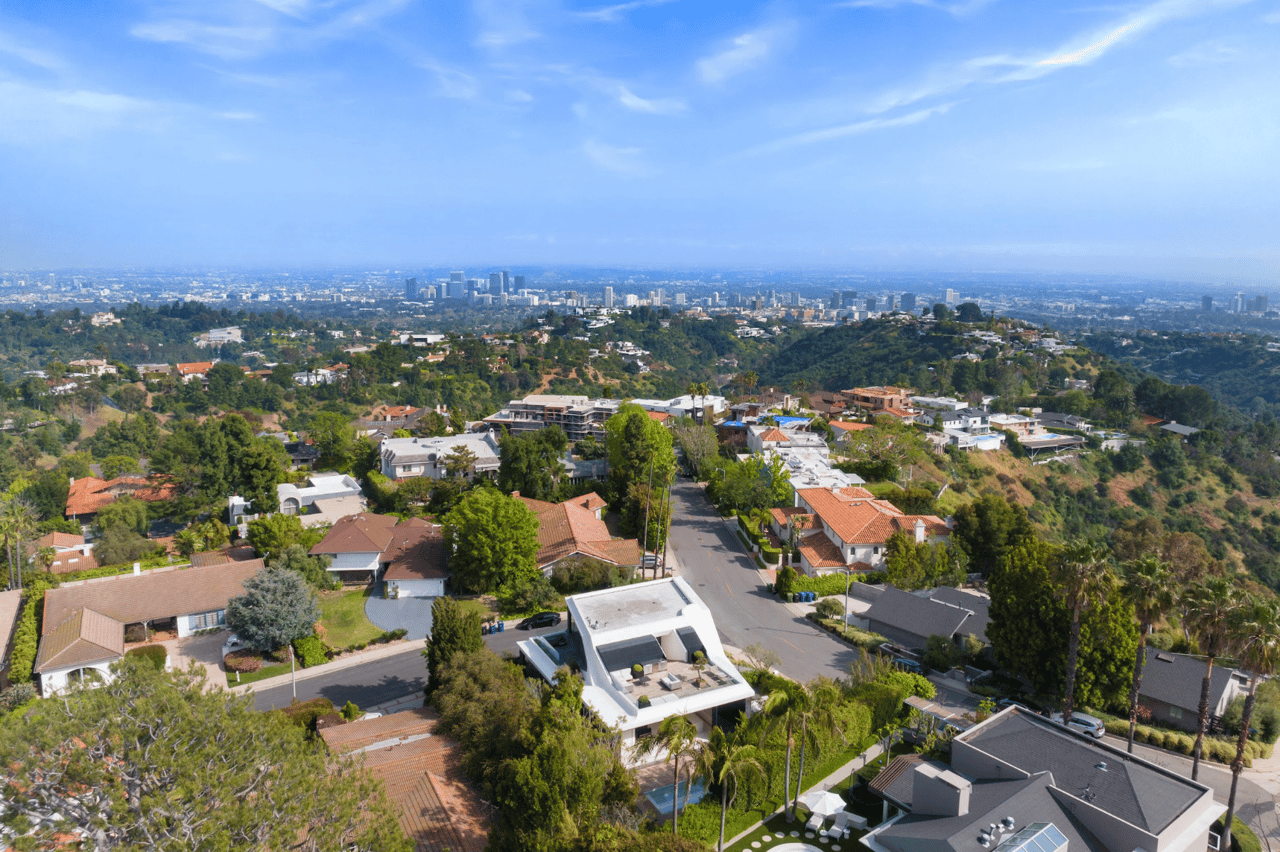
What Actually Happened in September
Let me be straight with you: if you've been sitting on a Pacific Palisades lot since the fires, waiting for the market to "figure itself out," it just started to. The former Atrium building site at 860 Via de la Paz, roughly 15,000 square feet, sold to a member of the Buss family (longtime owners of the Lakers) for $7.1M. Around the same time, other land in the community has traded as high as $487 per square foot, with retail parcels reaching $803 per square foot.
Here's the part people miss: this is not a flood of activity. Only six commercial properties have sold in Pacific Palisades since the fires, according to Maher Commercial Realty. That is a thin market by any definition. But thin markets move fast once they move, and the buyers stepping in right now, the ones with enough conviction to close on a burned-out parcel, are setting the comps that every seller after them will be measured against.
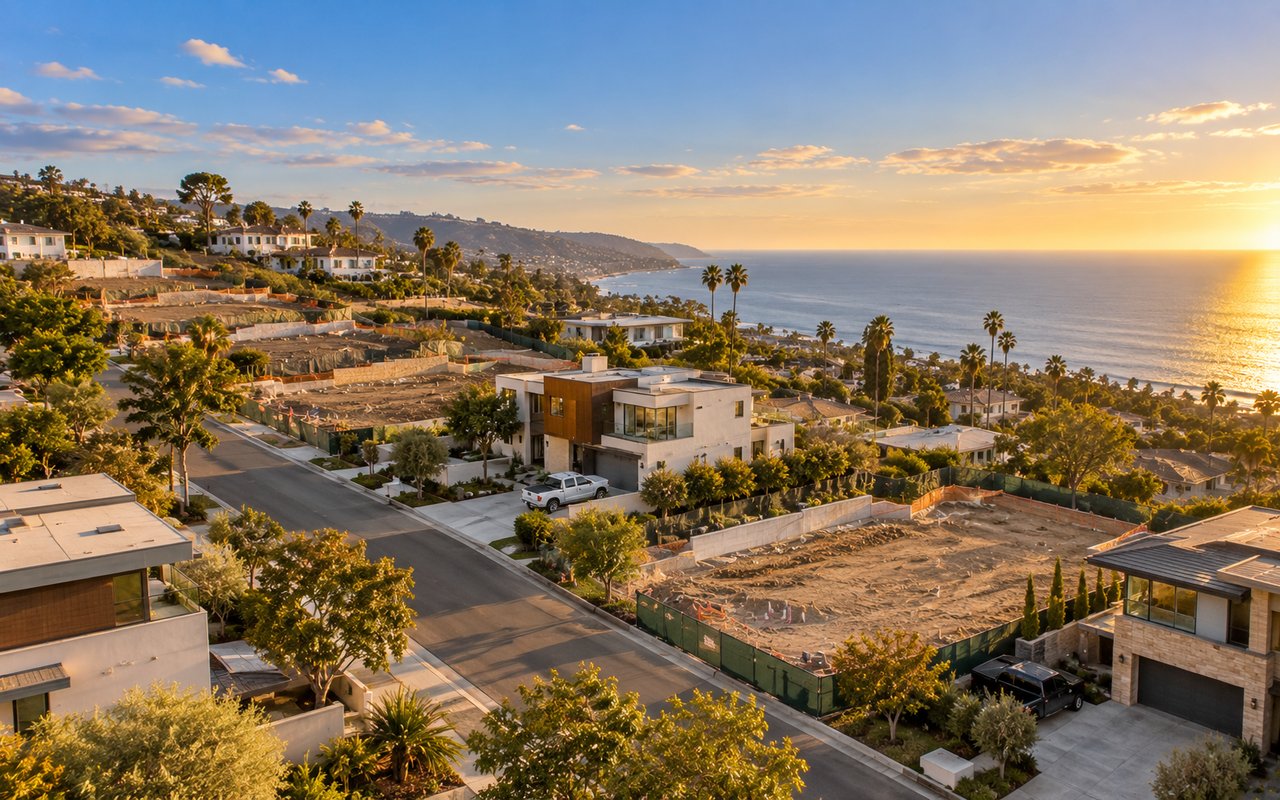
On the residential side, the rebuild itself keeps accelerating in parallel. Palisades passed 1,000 homes started earlier this year, and as of mid-August the Pali Rebuild Map showed 35 completed primary residences. Permits keep climbing month over month. None of this happened by accident. It's the natural result of insurance getting sorted out, entitlement paths getting clearer, and builders finally having enough certainty to commit real capital instead of waiting on the sidelines.
Why This Isn't Happening in a Vacuum
It's worth saying plainly: this land price strength is happening against a headwind, not a tailwind. The California FAIR Plan just announced a 29.1% average rate increase for its 675,000-plus policyholders, with wildfire-zone premiums in some cases doubling. Mortgage rates sit at roughly 7% after the Fed's September hike, its first rate increase in more than three years, which is not the direction buyers were hoping for. Financing and insuring anything in a fire-affected area got harder this month, not easier.
That's exactly why the Palisades land numbers matter. Buyers are paying record land prices in spite of higher borrowing costs and a harder insurance market, not because those pressures eased. That tells you the demand underneath these sales is real conviction about the neighborhood's recovery, not cheap money chasing a deal. It also means the buyers who are willing to underwrite a lot purchase today are unusually serious, which is good news if you're a seller trying to gauge whether an offer is credible.
Why Land Prices Are Climbing Now
Raw land in a burned community is a strange asset. A year ago, Palisades lots were fully developed, high-value parcels. Almost overnight, they became vacant land with no structure, no clear insurance path, and a lot of uncertainty about what could be rebuilt and how fast. That uncertainty is what kept land prices soft through most of 2025 and early 2026.
What changed is confidence, not fundamentals. The location didn't get better. The ocean proximity, the schools, the neighborhood bones were always there. What's different is that builders and investors now have enough data points completed rebuilds, permit timelines, insurance workarounds to underwrite a purchase with real numbers instead of guesses. That's exactly the kind of market where early movers get rewarded, and everyone else pays retail once the uncertainty is gone and the discount for taking on risk disappears with it.
What This Means If You're Sitting on a Fire Lot
If you still own a Palisades lot and haven't sold or started rebuilding, you have three real options: sell now while comps are still forming in your favor, hold and rebuild yourself, or wait and see where prices land in another six months. There is no universally correct answer here, and anyone who tells you there is one hasn't looked closely at your specific parcel, your insurance settlement, and your actual appetite for a multi-year rebuild timeline.
What I will say directly: waiting has a cost. Every month this market firms up, the gap between what an early seller gets and what a late seller gets tends to widen, not narrow, because the buyers who are willing to pay for uncertainty are exactly the ones setting today's prices. Once the uncertainty clears further, those same buyers stop paying a premium for taking on risk you're currently still holding, and the next wave of buyers negotiates from a position of much less urgency.
The 1% Question
I've built Clear Way's Palisades work around a flat 1% listing fee for fire-affected lot owners. This is not a discount play. It's a give-back to a community that's had a brutal eighteen months, and it only applies to fire-affected lot sales, not rebuilds or unrelated transactions.
Here's what that actually looks like in dollars. On a $2M lot sale, a standard 3% listing side commission runs $60,000. At 1%, that's $20,000, a $40,000 difference. That is not money in my pocket instead of yours. It's money that stays with a family who is already absorbing insurance shortfalls, temporary housing costs, and the emotional weight of rebuilding a life, not a marketing gimmick dressed up as generosity.
I'll tell you plainly why I think I'm useful here and where that credibility actually comes from. I trained under the top agent working this specific market for a period after I launched Clear Way, to get a real, working grasp of how Palisades deals actually move. I also develop property, which means raw land valuation and the insurance mechanics on a vacant parcel aren't abstract to me; they're something I deal with directly. That combination, not tenure, and not a lifetime living in the neighborhood, is what I bring to a lot sale conversation.
Honest Downsides
I'm not going to pretend this market is simple or that selling now is automatically the right move for everyone. A thin market cuts both ways: it means strong prices for sellers right now, but it also means fewer comparable sales to lean on, which makes it harder to know with certainty whether a specific offer is fair for your specific lot. Location within the burn zone, lot size, slope, view corridor, and your individual insurance settlement all move the number more than any headline statistic will.
Insuring and financing a vacant lot is also still genuinely difficult. Vacant land carries different liability exposure than an occupied home, and with FAIR Plan premiums climbing 29.1% across the board, the carrying costs on a lot you're not actively building on can add up faster than owners expect. Lenders are also more conservative in underwriting raw land in a wildfire zone than they were pre-fire, which narrows your buyer pool even in a strong market.
Rebuilding instead of selling can also make financial sense for some owners, particularly if your insurance settlement covers most of a rebuild and you have the bandwidth and patience for a multi-year project. Selling isn't automatically the smarter move just because prices are rising. It depends on your actual numbers, not the numbers in this post.
Who This Is For
This is for Palisades lot owners who haven't sold or broken ground yet and are trying to figure out whether this month's activity changes their calculus. It's also for anyone watching the Palisades from the outside, out-of-state investors, builders scouting sites, or SFV clients curious about a market that gets a lot of headlines but not much straight talk about what the numbers actually mean.
This is not a pitch to rebuild-in-progress owners who are already committed to their project, and it's not written for buyers looking for a bargain. There isn't one right now, and anyone telling you otherwise is selling you something.
What to Watch Over the Next 90 Days
A few things will tell us whether this is the start of a real trend or a handful of well-financed buyers moving early. Watch whether commercial sales volume picks up beyond this handful of deals, whether permit issuance keeps climbing at its current pace into Q4, and whether the FAIR Plan's rate hike and any follow-on legislation change how lenders price vacant-lot risk. If land keeps trading at or above these levels through year-end even as insurance and financing get more expensive, that's a strong signal the recovery is durable rather than a short-lived rush.
What This Means Beyond the Palisades
I work the San Fernando Valley day to day, not the Palisades full time, and I get asked about this market constantly anyway, mostly by two groups. The first is out-of-state buyers and investors who hear "Los Angeles fire recovery" in national headlines and assume the whole coastal market is either a disaster zone or a fire sale. Neither is true. What's actually happening is a narrow, data-driven land market finding its footing while insurance and financing get harder, which is a much more specific and more useful story if you're deciding whether to look here at all.
The second group is SFV clients and referral contacts who own a second property, inherited a parcel, or have family with land in the Palisades and want an honest outside read before they talk to someone who only works that market and has an obvious incentive to tell them prices are great no matter what. That's a real gap. Most agents active in the Palisades right now are either deeply invested in a bullish narrative or unfamiliar with how raw land and insurance actually interact after a total loss. I sit in a different spot: SFV-based, developer background, brief but direct training under the market's top broker, which means I can give a straight answer without needing the deal to go a particular way.
If that's you, whether you're the lot owner, a family member helping someone decide, or an investor trying to understand a market you've only read about, that gap is exactly where I'm useful.
Bottom Line
Palisades land sales are thin, but they're moving, and the prices from this month a $7.1M site sale, land trading up to $487 a square foot- are the clearest signal yet that the market has decided the Palisades is coming back, even against higher rates and a harder insurance environment. If you own a fire-affected lot, the question worth asking isn't whether the market has recovered. It's whether you want to be one of the sellers setting today's comps or one of the sellers waiting to see what next quarter's comps look like instead.
If you want a straight, no-pressure read on what your specific lot is worth in this market, that's a conversation I'm glad to have.
Justin Bonney is a California real estate agent (DRE #01338897) and the owner of Clear Way Real Estate in Sherman Oaks. He specializes in Lake Balboa, Van Nuys, Sherman Oaks, and the surrounding San Fernando Valley, with a dedicated focus on Pacific Palisades fire-lot sales.