Let me be straight with you. If you've inherited a home in California, the single biggest mistake most people make isn't about the listing. It isn't about timing the market. It's about taxes. Specifically, it's about a rule called step-up basis, and it's routinely missed by tax preparers who don't specialize in real estate.
I've watched this mistake cost heirs potentially six figures on a single transaction. It almost cost one of my Lake Balboa clients that much. This post walks through what the step-up basis actually is, why general tax preparers often miss it, and what to do if you've inherited a property or are about to inherit one.
I'm not a CPA. This isn't tax advice. But after 15+ years selling real estate in the San Fernando Valley, I've seen this rule get overlooked enough times that I now treat it as part of my job to flag it for every client who inherits a home.
The Story That Started This
In 2019, a woman walked into one of my open houses in the San Fernando Valley.
She was caring for her mother, who was ill. She wasn't house hunting. She just stopped in. She took my flyer, and she kept it.
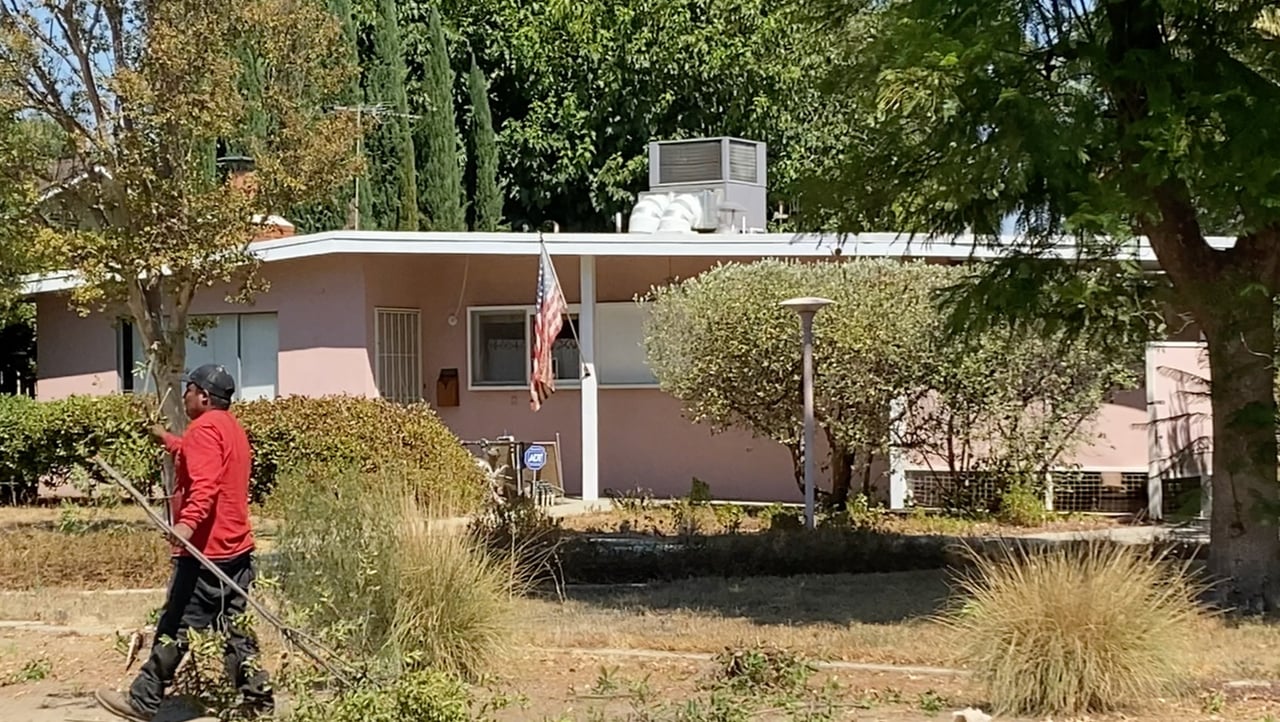
In early February 2020, her mother passed. She was the sole beneficiary of the trust. The home in question was a large-lot Atomic Ranch in Lake Balboa. Three generations of her family had owned it. Grandfather to mother to daughter.
A few weeks later, she called me.
We met at the house. She was grieving. We mapped out the plan: clear it out, stage it, list it. Standard sell-a-family-home process.
Then she paused and asked something unexpected. What if I bought it myself?
She had already run the numbers. Factored out the commissions. Thought about what made sense for her. This was her idea, and I agreed. Then I had to refinance my own home to make the offer work, which took time. Then COVID hit. Half the deals in California collapsed in two weeks. Mine didn't. We closed at the end of August 2020.
But the important part of this story isn't the transaction. It's what almost happened before escrow closed.
She mentioned, almost in passing, what her tax preparer had told her she would owe on the sale. Something felt off to me. The number was too high. Way too high.
Her tax preparer had missed the step-up basis. When we got a real estate CPA involved and re-ran the numbers, she saved potentially six figures in tax she was never supposed to owe.
That's the story. Here's the explainer.
What Step-Up Basis Actually Is
Step-up basis is a provision in the U.S. tax code that resets the cost basis of inherited property to its fair market value on the date of the original owner's death.
Let me walk through what that means with a concrete example.
Imagine your grandfather bought a home in Lake Balboa in 1970 for $25,000. That $25,000 is his cost basis. When he sold it, he would pay capital gains tax on the sale price minus that $25,000 basis (minus allowable deductions, but let's keep this clean).
Now imagine your grandfather never sold it. He held the home until he passed in 2000, when it was worth $500,000. He left it to your mother. Under the step-up basis, her cost basis resets from $25,000 to $500,000. The decades of appreciation your grandfather saw are wiped off the tax bill.
Fast forward to 2020. Your mother has also passed, and the home, now worth $900,000, goes to you. Your cost basis becomes $900,000, not $25,000.
If you then sell the home for $950,000, your taxable gain is $50,000, not $925,000.
At long-term capital gains rates, the difference between those two scenarios can be a tax bill in the tens of thousands versus one in the hundreds of thousands. That's not a rounding error. That's a life-changing number.
Why This Rule Gets Missed
Step-up basis is not hidden. It's not obscure. It's been in the tax code for decades and applies to essentially every inherited asset, not just real estate.
So why does it get missed? Three reasons.
First, the tax preparer community is not monolithic. A great general tax preparer who handles W-2 income, small business returns, and standard deductions may have very limited experience with inherited real estate. They see a large sale amount and use the original purchase price as the cost basis because that's the pattern they know from simpler transactions. If the heir trusts the preparer and doesn't know to ask the question, the mistake flows straight through to the tax return.
Second, the records are often messy. Grandpa bought the house in 1970, and there may not be a clean paper trail for what it was worth when he passed in 2000. Without a clear fair-market-value snapshot at the date of death, some preparers default to the original cost basis because it's a number they can document. That's the wrong move, but it's a common one. A real estate CPA knows how to establish date-of-death value retroactively, usually by pulling comparable sales from that period and, if needed, ordering a retroactive appraisal.
Third, heirs rarely know how to ask. If you've just lost a parent or grandparent, you're not in the headspace to double-check your tax preparer's math on a real estate transaction you've never done before. You ask how much you owe, they give you a number, and you write the check. The mistake never surfaces because no one is looking for it.
The Four Scenarios Where Step-Up Basis Matters Most
This rule is not just for inherited-home sales. Here are the four scenarios I see most often in my practice.
1. Selling the inherited property. This is the obvious one and the scenario in my Lake Balboa story. The cost basis determines your taxable gain at sale, so the step-up basis directly affects how much tax you owe.
2. Renting out the inherited property. If you inherit a home and convert it into a rental rather than selling it, your cost basis still matters. Depreciation is calculated based on the cost basis. A higher basis means larger depreciation deductions over the life of the rental property, which lowers your taxable rental income each year.
3. Refinancing against the inherited property. When you inherit and then borrow against the equity, the step-up basis doesn't affect the loan itself, but it affects your tax picture if you later sell. Get the basis right from day one so you know where you stand.
4. Holding the property and passing it on later. If you inherit and intend to hold long-term, your stepped-up basis becomes part of your own estate plan. Understanding the number now lets you plan intelligently for the next generation.
What To Do If You've Inherited Property
If you've inherited a home in California, or if you're caring for a parent and expect to inherit one, here's the action list I walk my clients through.
1. Establish the date-of-death fair market value early. This is the anchor number for the step-up basis. The cleanest way is a retroactive appraisal performed by a licensed appraiser. If the property has been sold since the date of death, a real estate CPA can also work backward from comparable sales of that period. Either way, get this documented before you file any return that involves the property.
2. Hire a real estate CPA, not a general tax preparer. This is the single most important move you can make. Ask potential CPAs directly how many inherited-property transactions they handle in a typical year. If the answer is "a few" or "sometimes," keep looking. You want someone who handles these regularly.
3. Gather the paper trail. Death certificate, trust documents, any prior appraisals, property tax records, and the original purchase documents, if you can find them. The CPA will use this to build a clean tax picture. The more you bring, the cleaner the outcome.
4. Work with a real estate agent who knows how to ask about taxes. This is self-serving to say, but it's also true. Your agent isn't your tax advisor, but a good agent flags tax questions before they become tax problems. If your agent never asks about your cost basis, your trust structure, or whether you've spoken to a CPA, that's a signal.
5. Don't rush the sale if you don't have to. If you have time, use it. Get the tax picture right before you list. The few weeks you spend confirming your basis and talking to a specialist CPA can save you more than the entire commission on the sale.
A Quick Word on Lake Balboa Specifically
This rule matters everywhere, but it's especially relevant in Lake Balboa and the broader western San Fernando Valley because so much of the housing stock is long-tenured. Many Lake Balboa homes have been in the same family for 30, 40, or 50 years. Grandparents who bought mid-century ranches here in the 1960s and 1970s have seen their properties appreciate across generations.
When those homes pass to heirs, the gap between original cost basis and current fair market value can be enormous. On a Lake Balboa Atomic Ranch that sold for $25,000 in 1970 and now trades for $1 million, the difference between applying step-up basis and missing it is between a small tax bill and a catastrophic one.
If you own a family home in Lake Balboa and your parents are aging, or if you know a property will pass to you, start the conversation with a real estate CPA now. Don't wait until the property is listed. Don't wait until you've gotten a high sale-price number from your current tax preparer. Start now.
A Companion Rule: California's Annual Homeowner Exemption
Step-up basis is federal. But once you're a California homeowner — whether by inheritance, by purchase, or by holding a property you already own — there's a separate state-level rule worth knowing: the Homeowners' Property Tax Exemption (BOE-266). It saves the average California homeowner about $90 per year in property taxes, and the same form protects heirs from massive reassessment under Proposition 19.
If you've inherited a California home and intend to keep it as your principal residence, you'll need to file BOE-266 within one year of the transfer to lock in the parent-child exclusion. I've written a full guide to that form, the deadlines, and the Prop 19 implications in a separate post here.
Honest Downsides
This isn't a silver bullet, and I want to be honest about what step-up basis doesn't do.
It doesn't make the sale of an inherited property tax-free. You'll still owe tax on gain above the stepped-up basis, and that gain is still subject to capital gains rates. On a hot market where the property continues to appreciate after the date of death, the tax bill can still be meaningful.
It doesn't apply to all assets in all situations. Jointly-held property, property held in certain types of trusts, and property with complicated title histories can produce surprises. A real estate CPA is the only person qualified to tell you how the step-up basis applies to your specific situation.
It doesn't help if you've already sold and filed a return using the wrong basis. Amended returns are sometimes possible, but the window is narrow, and the process is harder than getting it right the first time. This is a reason to move early, not a reason to panic about the past.
It doesn't replace estate planning. If you're the one holding the property and you want to minimize tax for your heirs, the time to plan is while you're alive, not after. A good estate attorney paired with a real estate CPA will save your family far more than either professional alone.
Who This Is For
This post is for anyone who falls into one of these categories:
- You've recently inherited a property in California and haven't yet sold or fully decided what to do with it
- You're caring for an aging parent and know a property will eventually pass to you
- You're a trustee or executor handling the estate of someone who owned real estate
- You've been told by a general tax preparer what you'll owe on an inherited-property sale, and the number feels high
- You're planning your own estate and want to understand what your heirs will face
If you're in any of these categories and you live in the San Fernando Valley, let's talk.
Bottom Line
The step-up in basis is one of the most valuable provisions in the U.S. tax code for heirs, yet it is routinely missed by general tax preparers. If you've inherited property, the cost of getting a real estate CPA involved is tiny compared to the cost of getting the cost basis wrong.
And if you're working with a real estate agent to sell an inherited home, make sure your agent is the kind who asks the tax question, not the kind who ships the listing and leaves the rest to you.
I'll ask the questions that save you money, connect you with a CPA who specializes in inherited real estate, and make sure the numbers are right before we ever talk about listing.
Justin Bonney is a California real estate agent (DRE #01338897) and the owner of Clear Way Real Estate in Sherman Oaks. He lives in Lake Balboa and specializes in Lake Balboa, Van Nuys, Sherman Oaks, and the surrounding San Fernando Valley.