Quick Answer
Lake Balboa is a quiet, family-oriented neighborhood in the central San Fernando Valley with a median home price of around $885,000 in spring 2026. It offers larger lots, mature trees, and direct access to the 2,000-acre Sepulveda Basin Recreation Area, features that don't exist at this price point in neighboring Sherman Oaks or Encino. It is best for buyers who want space, community, and park access, and who are willing to drive a few minutes for groceries and dining.
The Valley's Best-Kept Secret Is Getting Out
I live in Lake Balboa. I walk my dog along the path at Anthony C. Beilenson Park most mornings. I know which streets are quiet, which are getting ADUs built behind the main house, and which blocks are appreciating faster than the rest. I also know what buyers say when they drive through for the first time: This is not what they expected the San Fernando Valley to look like.
For the last twenty years, Lake Balboa has been the neighborhood that people either did not know about or did not talk about. That is starting to change. When I first got involved with the Lake Balboa Neighborhood Council, as Communications Chair and later Planning and Land Use Co-Chair, the conversation in the community was about keeping the place unchanged. Today, the conversation is about how to absorb the attention it is getting without losing the character that made it worth paying attention to in the first place.
This guide is for anyone thinking about moving here, investing here, or selling a home here in 2026. I will walk you through what it actually feels like on the ground, what the real estate market looks like right now, who thrives in this neighborhood, and who should probably keep looking. No promotional fluff. Just the honest version.
How Lake Balboa Became Its Own Neighborhood
Before 2007, most of what we now call Lake Balboa was labeled Van Nuys on every map, every document, and every MLS listing. The neighborhood officially received its own designation on August 22, 2007, after years of advocacy by residents who wanted their community recognized as distinct from the denser, more commercial parts of Van Nuys to the east.
That distinction matters more than most people think. Lake Balboa has its own neighborhood council, its own identity on the zoning maps, and increasingly, its own price point. Zillow and Redfin eventually caught up and started displaying Lake Balboa as its own market area. The post-2007 generation of residents moved here specifically because Lake Balboa was Lake Balboa, not because it was part of something else.
The Lake Balboa Neighborhood Council, usually abbreviated LBNC, is one of the more active neighborhood councils in the San Fernando Valley. It weighs in on development projects, zoning changes, park improvements, and quality-of-life issues. If you buy here, you will hear about the LBNC. If you attend a meeting, you will recognize your neighbors and probably some of the agents who are serious about working this area.
What It Actually Feels Like Here
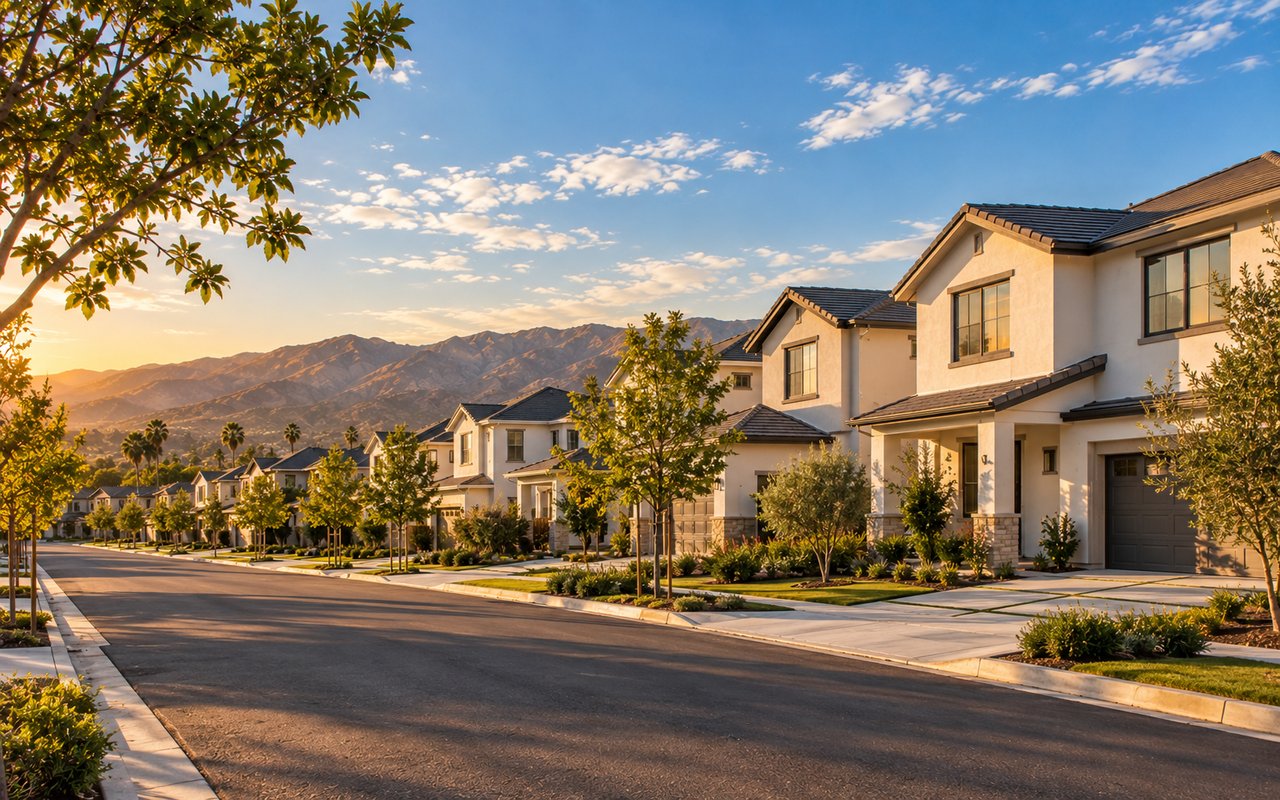
Lake Balboa has a specific character that does not match the rest of the central Valley. Streets are wide. Trees are mature. Most blocks are ranch-style homes from the 1950s and 1960s on lots that are generous by Los Angeles standards.
Walk down almost any residential street on a weekday afternoon, and you will see the same things: older Toyotas next to newer SUVs, basketball hoops at the ends of driveways, kids riding bikes, dogs on walks, neighbors actually talking to each other. Many of the homes have been owned by the same families for decades. The multigenerational household is more common here than in almost any other Valley neighborhood.
That long-term ownership has a real effect on how the neighborhood feels. Homes get maintained rather than flipped every three years. Trees grow mature because nobody cuts them down. Kids who grew up on the block come back to buy homes two streets over when they start their own families. The culture rewards staying, and staying has built something that is hard to replicate in a neighborhood where half the homes turn over every five years.
That same culture makes Lake Balboa a harder market for anyone who shows up and tries to play a short game. Flippers who paid top dollar in 2022 and thought they would double their money in eighteen months learned a lesson here. The neighborhood does not reward speculation. It rewards patience.
The Park Is the Whole Point
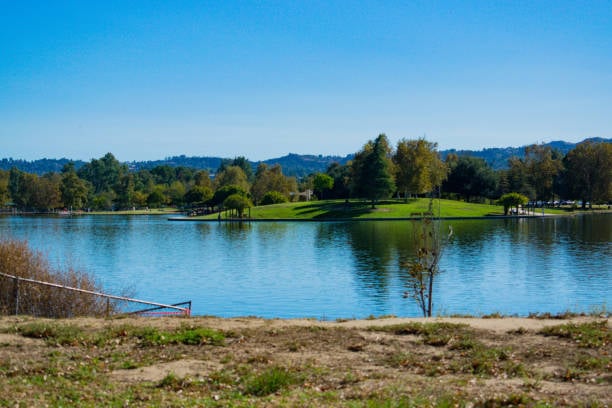
Lake Balboa is named for the lake. Not the ocean, not a movie studio, not a freeway interchange. The lake. Anthony C. Beilenson Park, which most locals just call Lake Balboa Park, is part of the larger Sepulveda Basin Recreation Area, and if you asked me to pick one reason this neighborhood exists as a distinct place, that would be it.
The Sepulveda Basin is almost 2,000 acres of open space in the middle of Los Angeles. For context, that is more than twice the size of Central Park in Manhattan. Inside that space you will find the 27-acre Lake Balboa itself with paddleboats and a paved path that runs all the way around it, the Japanese Garden (Suihoen), the Sepulveda Basin Wildlife Reserve, cricket pitches, softball fields, the Woodley Golf Course, the Balboa Sports Complex, the Encino Velodrome for track cyclists, a major skate park, a dog park, children's playgrounds, and the Orange Line bike path running along the southern edge.
Residents of Lake Balboa walk, bike, or drive to this every day. Weekend mornings at the lake are full of families doing the loop. Weekday evenings are full of dog walkers and runners. If you have young children, the playgrounds are serious upgrades over what most LA neighborhoods offer. If you have older parents who want to be outside but not alone, the walking paths are flat, safe, and busy enough to feel comfortable.
The Japanese Garden specifically deserves a mention. It sits on the grounds of the Donald C. Tillman Water Reclamation Plant and is one of the most underrated public spaces in Los Angeles. It has been closed for extended restoration work, and the planned 2026 reopening will restore one of the community's most distinctive assets. I will update this guide once the reopening date is officially confirmed.
None of the neighboring Valley neighborhoods has this kind of park access without driving further. Encino has Los Encinos State Historic Park, which is beautiful but small. Sherman Oaks has Woodcliff and parts of Fryman Canyon, both of which require a drive. Van Nuys has Van Nuys-Sherman Oaks Park, which is a fine neighborhood park but not a 2,000-acre destination. Lake Balboa has a real one, and that real one is the reason half the people who move here move here.
Schools: The Honest Version
Here is what I tell every family that asks about Lake Balboa schools.
The neighborhood feeds into the Los Angeles Unified School District, which means school quality varies by specific address in ways that are not always obvious on a neighborhood map. The main public elementary schools serving parts of Lake Balboa include Valerio Street Elementary and Noble Avenue Elementary. Middle school placement varies by address and by which charter or magnet options a family chooses. High school is usually Van Nuys High School, which has a strong magnet program, or Birmingham Community Charter, a large charter high school in Lake Balboa with a solid performance record and well-regarded athletics.
The critical piece for buyers: the school assignment is address-specific. Two homes four blocks apart can feed into different schools, resulting in meaningfully different outcomes. Before you make an offer on a specific property, verify the exact school assignment for that address with the LAUSD resident school lookup. Do not rely on the seller's agent, the listing description, or a general "this neighborhood has good schools" claim. I have seen buyers make this mistake and regret it.
The charter and magnet options in the area, particularly Birmingham Community Charter, give families additional paths that change the calculus. A lot of Lake Balboa families use some combination of public, charter, and magnet placements depending on grade and specific child. This is one of the conversations I spend the most time on with buyers who have school-age children. It is worth the time.
Where Locals Actually Eat
Lake Balboa is not a restaurant destination. Nobody is driving here from Culver City for dinner. There are, however, real places that locals go to on a regular basis, and the mix has improved every year.
A few that have held up:
Salsa and Beer on Victory Boulevard is the Valley institution everyone mentions first. Mexican food, large portions, strong drinks, family-friendly, usually a wait on weekends. If you move here and ask anyone for a restaurant recommendation, this is what you will get.
Xochipilli Taco Bar, also on Victory, is the more refined counterpart. Better tacos, smaller space, slower pace.
Blue Palms Brewhouse on Balboa covers the beer-and-a-burger end. Solid beer list, decent food, neighborhood atmosphere.
Black Heart Coffee Co. is where the neighborhood gets coffee and breakfast or brunch. It is a local business, not a chain, and it has become a meeting spot for neighborhood council members, realtors, and families on weekend mornings.
Humble Bee Café is the other coffee anchor, with pastries and a breakfast menu that locals actually use.
Lulu's, Box Thai, Fortune House, OMGrill, and a handful of others fill in the working dining options. None of them is a destination. All of them are reliable.
For anything beyond this, you drive. Ventura Boulevard in Sherman Oaks and Encino is 10 to 15 minutes away, depending on traffic. Topanga Canyon and Reseda have their own options. If you want walkable restaurant-row density, this neighborhood will not deliver that. If you want a solid local rotation with no pretension, you have it.
Shopping and Errands: The Reality
Daily errands in Lake Balboa happen by car. Westfield Topanga and The Village at Westfield Topanga are about 15 minutes west. The Sherman Oaks Galleria is about 15 minutes east. Target, Home Depot, and Costco on Roscoe are a few minutes north.
For groceries, most locals rotate between Vons, Ralphs, and Stater Bros, all of which are within a short drive. Trader Joe's is a few minutes away in Van Nuys or Encino. A farmers' market on weekends is accessible at the Van Nuys Civic Center.
The closest walkable retail cluster is on Victory Boulevard between Louise and Balboa, which includes the small-business cluster mentioned above. That is not a walking district, the way Ventura Boulevard is. It is a block of useful shops and restaurants, next to busy through traffic.
If walkable retail is a deal-breaker for you, Lake Balboa is not your neighborhood. If you are willing to drive three to seven minutes for almost everything, you get a quieter residential setting in exchange, and most of my buyers decide that trade is worth making.
Getting Around
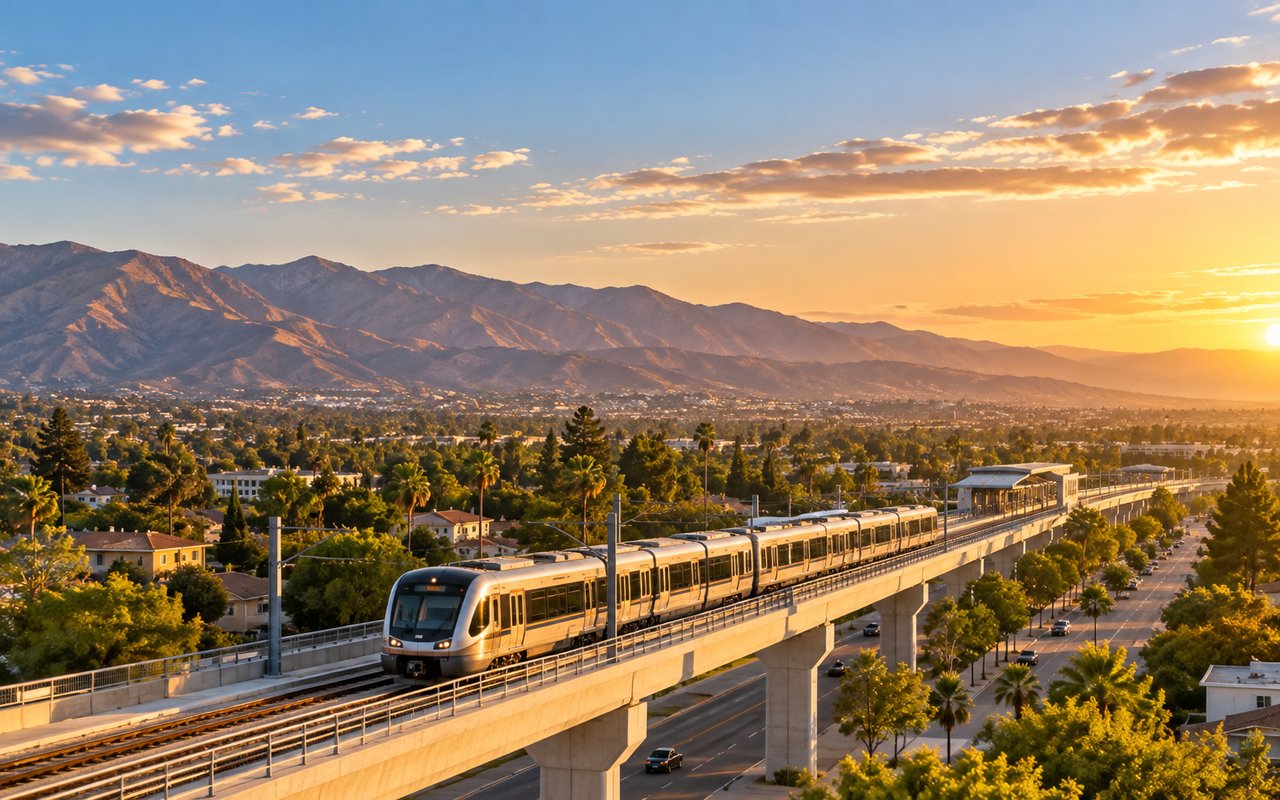
The Orange Line bus rapid transit station at Balboa is a real asset. From Balboa Station, you can get to the Metro Red Line at North Hollywood in about 20 minutes, which connects you to downtown LA, Hollywood, and the airport connector. The Orange Line bike path runs parallel, making this one of the easier Valley neighborhoods to bike commute from.
For drivers, the 405 is three to six minutes away, depending on your street, and the 101 is about eight minutes south. Both corridors are painful during rush hour, as in every Valley neighborhood. Westbound morning commutes to Warner Center, Calabasas, and Woodland Hills are manageable, usually 20 to 30 minutes. Eastbound commutes into Hollywood or downtown range from 35 to 55 minutes, depending on the day. If you are commuting to Culver City or the Westside, give yourself an hour and bring patience.
A lot of my Lake Balboa buyers are now working in hybrid or fully remote roles, which changes the calculus. If you are in the office twice a week, this neighborhood works. If you are doing a daily Westside commute, you should pressure-test the drive at your actual departure time before you commit.
Real Estate Reality in 2026
The current Lake Balboa market is steady. Single-family home prices range from roughly $850,000 on the lower end for smaller homes on the north side, up to $1.2 million or more for larger or renovated homes south of Victory Boulevard closer to the park. The median is around $885,000 as of spring 2026, representing modest year-over-year appreciation of about 4 percent.
I wrote a separate full Lake Balboa Spring 2026 Market Report that breaks down the pocket-by-pocket picture. The short version: South of Vanowen near the park is the premium pocket. The blocks between Vanowen and Sherman Way are the value play. Anything north of Saticoy is a different conversation with different comp patterns.
Lot sizes matter more here than in most Valley neighborhoods. A standard residential lot in Lake Balboa is often 7,000 to 8,500 square feet, which is meaningfully larger than what you find in Sherman Oaks or Van Nuys proper. That size difference drives the ADU conversation, which is one of the biggest topics in the neighborhood right now.
Lake Balboa is the epicenter of ADU construction in the Valley. State laws like SB-9 and the Accessory Dwelling Unit statutes allow the addition of rental units to qualifying lots, and many Lake Balboa lots qualify. If you are buying here as an investor or as a homeowner who wants rental income to offset a mortgage, ADU potential is part of the underwriting. I wrote a full Lake Balboa ADU Guide that walks through costs, permits, and the real math.
The short- to medium-term forecast is for continued steady appreciation without fireworks. The neighborhood is neither in a bubble nor in a downturn. It is in a boring, well-supported uptrend, which is what you want if you are buying to live in.
Who Actually Lives Here
Four archetypes show up in my Lake Balboa transactions more than any others.
First, multigenerational families. Parents, kids, and grandparents under one roof, often with an ADU or converted garage providing semi-separate space for the grandparents. Lake Balboa is unusually welcoming to this configuration. The larger lots, the schools nearby, the walkable parks, all of it maps to what a multigenerational household needs.
Second, buyers who were priced out of Sherman Oaks or Encino. These are buyers who wanted proximity to Ventura Boulevard and realized their budget would not get them the home they wanted in those neighborhoods. Lake Balboa at the same budget delivers a bigger lot, more house, and park access that they would not have had in Sherman Oaks. The adjustment is trading walkability for value.
Third, long-term owner-occupants who have been here for 20, 30, or 40 years. This is the backbone of the neighborhood. These are the neighbors who know everyone on the block, who still have their children's bedrooms set up, and who are now deciding whether to sell, downsize, or hold. When one of these homes comes to market, it is usually a standard-finish property that has not been updated recently and represents real upside for a buyer willing to do the work.
Fourth, investors and small-scale real estate operators. SB-9 and ADU opportunities draw a specific kind of buyer who is running the numbers on rental income and long-term appreciation. These are the buyers most likely to overlook the neighborhood's quality-of-life features and focus purely on the math, which sometimes works and sometimes does not.
Honest Downsides
Most Lake Balboa guides will not tell you this part. I will.
Lake Balboa is not walkable for errands. You will get in your car for groceries, for a haircut, or for the gym. If walkability is a top-three priority for you, this is the wrong neighborhood.
Traffic on Sepulveda Boulevard, Victory Boulevard, and Balboa Boulevard is heavy during commute hours. If you end up on a home that is directly on one of these streets, you will hear the traffic. Interior blocks are quiet. Perimeter blocks are not.
School quality varies by specific address, which can mislead buyers who have not done the homework. Not every address delivers the outcome that the neighborhood's reputation suggests.
The terrain is flat. If you want hillside views, canyon settings, or any kind of elevation, Lake Balboa is the Valley floor. You will not get that here.
Lake Balboa is surrounded by neighborhoods with different energy. Parts of Van Nuys to the east are denser and more commercial. Parts of Winnetka and Reseda to the north are transitional. Lake Balboa itself maintains a quiet residential character, but the drive from your driveway to the 405 might go through pockets that do not match the neighborhood's feel. This surprises some out-of-state buyers.
And the ADU wave, for all the upside it creates for homeowners, is changing the density and feel of some blocks. More ADUs mean more cars parked on the street, more people, and a slightly different daily routine. Most residents see it as a net positive. A few do not.
Who Should Buy Here and Who Shouldn't
Buy in Lake Balboa if you want a quiet, stable, family-oriented residential neighborhood with real park access, larger lots, and a price point that still makes sense in 2026 for a single-family home in Los Angeles. Buy here if you have school-age children and you are willing to do the address-specific school research. Buy here if you are the kind of buyer who values community over prestige and substance over brand-name neighborhoods. Buy here if an ADU or multigenerational setup is part of your plan.
Do not buy in Lake Balboa if walkability is non-negotiable. Do not buy here if you are driven by Ventura Boulevard dining and shopping as a lifestyle requirement. Do not buy here if you are focused on prestige zip codes, which in the Valley still mean Sherman Oaks, Encino south of the boulevard, or Studio City. Do not buy here if you need hillside views.
For a direct comparison to neighboring options, I have also written Lake Balboa vs. Sherman Oaks, Lake Balboa vs. Encino, and Lake Balboa vs. Van Nuys, which walk through the specific trade-offs in each direction.
The Bottom Line
Lake Balboa is a grown-up version of the San Fernando Valley. It is the neighborhood that shows up when someone says they want a real community, a real backyard, and a real commute to the rest of LA, without paying Sherman Oaks or Encino prices. It is not the flashiest part of the Valley. It is the one that actually delivers on the suburban premise that many LA neighborhoods only pretend to.
If I had to describe it in one sentence: Lake Balboa is the last pocket of the central Valley where you can still buy a three-bedroom single-family home on a 7,500 square foot lot within walking distance of a 2,000-acre park for under $1 million. That math will not hold forever. The Japanese Garden reopening, the ADU wave, and the general discovery of this neighborhood by buyers who used to look elsewhere are all compressing the window.
If you are serious about buying here, the time is now, not in two years. If you are selling here, you have more leverage than you probably realize, but only if your agent actually understands the block-by-block dynamics.
Frequently Asked Questions
Is Lake Balboa a safe neighborhood?
Lake Balboa is a quiet, predominantly residential neighborhood with stable long-term homeownership and the kind of block-by-block community that residents say creates a sense of safety. As with all of Los Angeles, property crime exists. Interior residential blocks tend to be quieter than the perimeter streets along Sepulveda, Victory, and Balboa Boulevards, which carry significant through traffic.
Is Lake Balboa worth living in?
Lake Balboa is worth living in for buyers who value larger lots, park access, and a stable, long-term residential character over walkability and prestige addresses. The neighborhood delivers the suburban premise that many LA areas only pretend to, with real backyards, mature trees, and a 2,000-acre park within walking or biking distance. It is not the right fit for buyers whose top priority is walkable dining and shopping.
What is the difference between Lake Balboa and Van Nuys?
Lake Balboa officially separated from Van Nuys in 2007, gaining its own neighborhood designation, council, and identity. Lake Balboa is quieter and more residential, with larger lots and direct park access, while Van Nuys is denser, more commercial, and includes major corridors like Van Nuys Boulevard. Home prices in Lake Balboa typically run higher per square foot than comparable properties in Van Nuys.
What is the difference between Lake Balboa and Encino?
Encino offers walkable dining on Ventura Boulevard, greater prestige, and meaningfully higher home prices, particularly south of Ventura. Lake Balboa offers larger lots, direct access to the Sepulveda Basin, and a price point typically 30 to 40 percent below comparable Encino properties. Some buyers who can afford Encino choose Lake Balboa for the space and park access alone.
Is Lake Balboa good for families with kids?
Lake Balboa works well for families who value larger lots, multigenerational living arrangements, and proximity to the Sepulveda Basin's playgrounds and sports facilities. School quality varies by specific address. The neighborhood feeds into LAUSD with options including Birmingham Community Charter and various magnet programs. Verify the exact school assignment for any property before making an offer, as two homes a few blocks apart can feed into different schools.
How long does it take to commute from Lake Balboa to downtown Los Angeles?
Driving from Lake Balboa to downtown Los Angeles typically takes 35 to 55 minutes during weekday commute hours, depending on traffic on the 101 and 405 freeways. The Metro Orange Line bus rapid transit at Balboa Station connects to the Red Line at North Hollywood in about 20 minutes, with onward rail service to downtown. Off-peak driving times can drop to 25 to 35 minutes.
Working With Justin
I live in Lake Balboa. I walk in the park. I have served on the Lake Balboa Neighborhood Council as Communications Chair and as Planning and Land Use Co-Chair. I work in Lake Balboa, a primary farming area, and my review profile is the strongest of any agent currently active in this neighborhood.
If you are thinking about buying or selling in Lake Balboa, I am genuinely the right person to talk to. Not because I need the business. Because I am the one who is here.