Let me be straight with you. Canoga Park doesn't have the Zillow glamour of Woodland Hills. It doesn't have the polish of West Hills. It won't make your friends say "Oh, great choice" when you tell them where you bought. And that's exactly why it's one of the most interesting buys in the San Fernando Valley right now.
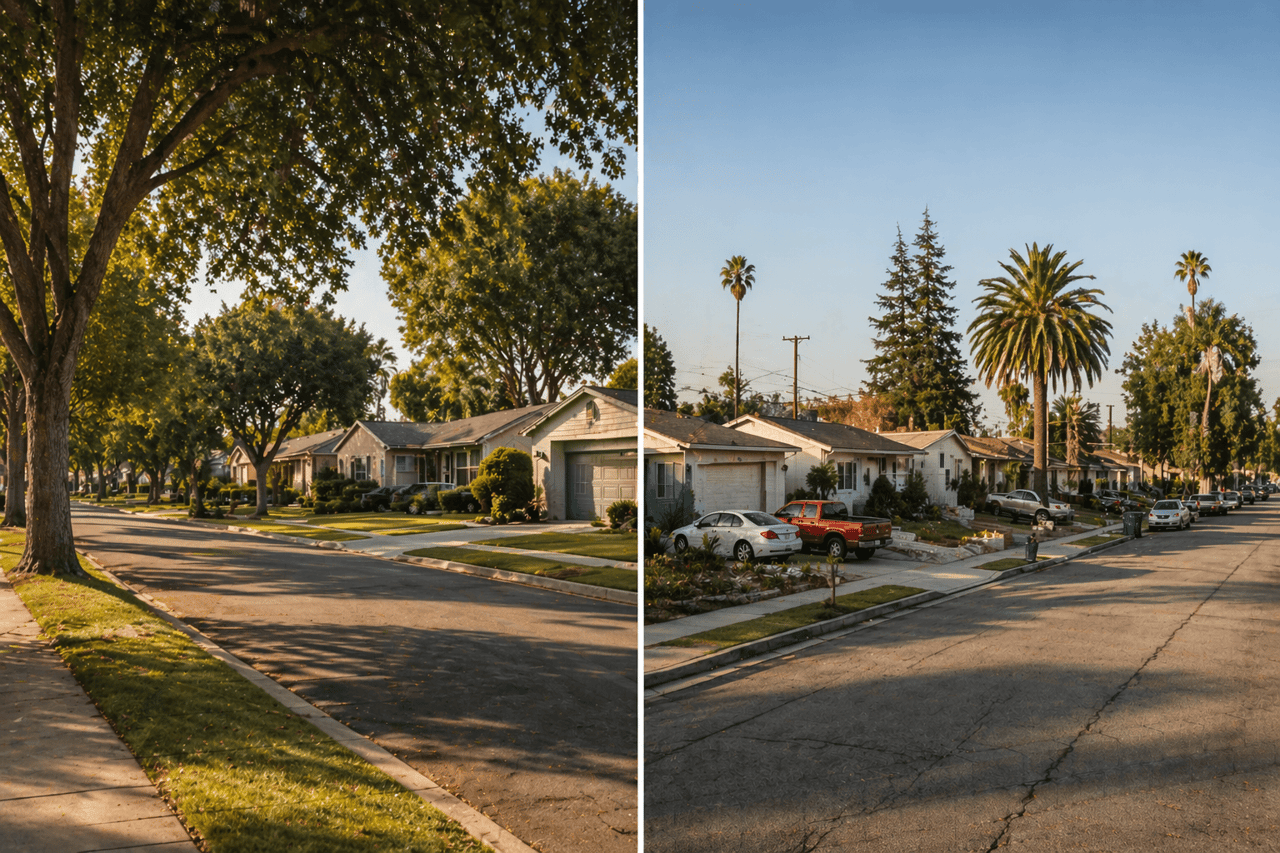
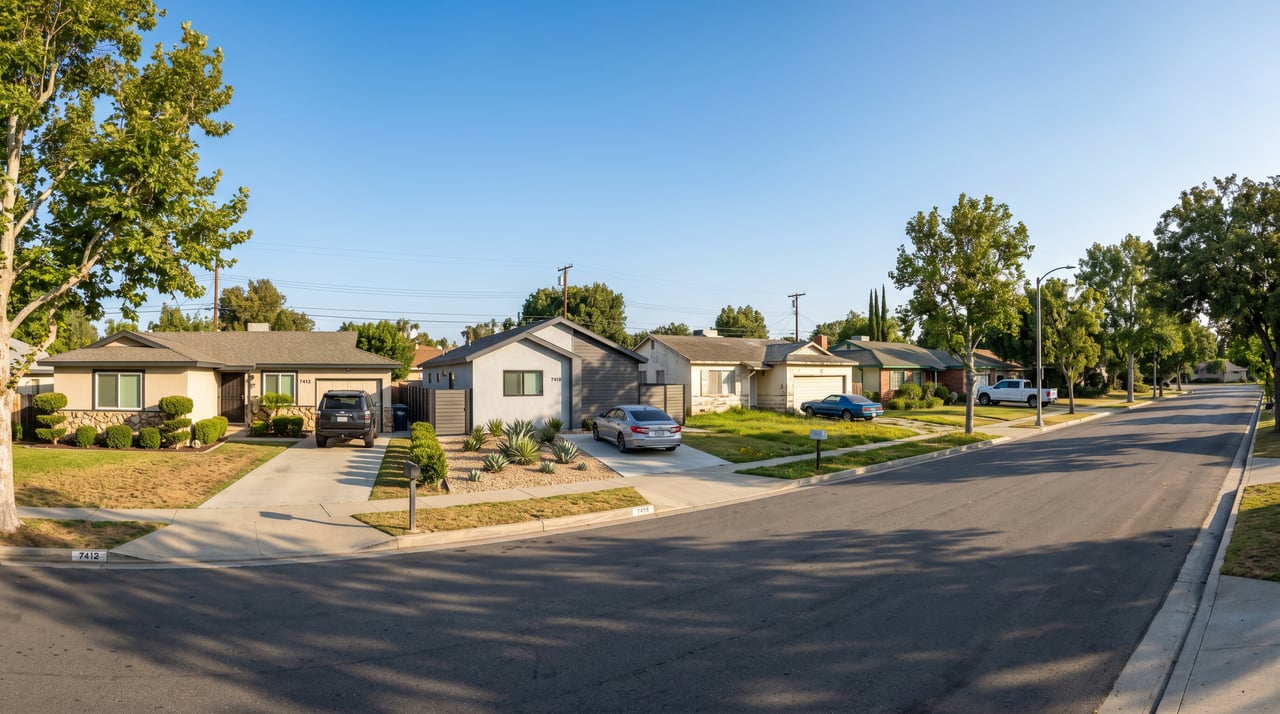
This is a neighborhood that most buyers write off based on a reputation that's a decade out of date. They drive down Sherman Way, see the older commercial strips, and assume the whole neighborhood is like that. It isn't. The residential pockets of Canoga Park, especially south of Vanowen and east toward Winnetka, tell a different story. Mid-century ranch homes on deep lots. Mature trees. Real neighborhoods. Prices that still make sense.
In 2026, with Warner Center development pushing west and the rest of the west Valley pricing out first-time buyers, Canoga Park is where the smart-money math actually works. Here's the honest breakdown of what's happening, what you're buying, and whether now is the right time for you.
The Canoga Park Market in 2026
Let me put real numbers on this before I get into anything else.
Median home prices in Canoga Park in early 2026 sit around $750K to $900K, depending on the pocket and housing type. You get a meaningful mix: single-family mid-century ranches, smaller 1950s tract homes, condos, townhomes, and some newer infill. That mix is one reason the median can look lower than comparable neighborhoods. It's not that single-family homes are cheap. It's that the inventory is more varied.
For comparison: West Hills sits around $1.1M to $1.3M. Woodland Hills around $1.1M median. Winnetka, immediately east, sits slightly above Canoga Park at around $800K to $950K. Canoga Park is the value play in the west Valley, and it's not subtle.
Days on market run around 30 to 45 days depending on the pocket. That's slower than Lake Balboa or Sherman Oaks but faster than a lot of people assume. Homes in the stronger pockets, particularly Warner Ranch and the streets bordering Woodland Hills, move faster than the neighborhood average.
Inventory in 2026 is tighter than it was in 2023 and 2024. The west Valley as a whole is still inventory-constrained, and Canoga Park benefits from that. It's not a buyer's market. It's a better-value market than its neighbors.
The Best Pockets of Canoga Park
Not every street in Canoga Park is created equal, and this is the part where most buyers miss the real opportunity. Let me walk you through the specific areas worth your attention.
Warner Ranch. Tucked in the southern end of Canoga Park, between Vanowen and Victory Boulevards. This is the most polished pocket of the neighborhood. Mid-century ranch homes on deeper lots, quieter streets, and a meaningful pricing premium over the rest of Canoga Park. Prices here can push into West Hills territory on the best blocks.
South of Vanowen, east of Topanga. Solid mid-century ranch stock. Deeper lots than most buyers expect. The streets between Vanowen and Sherman Way, east of Topanga, have some of the best value-per-square-foot in the west Valley.
Streets bordering Woodland Hills. Anything south of Ventura Boulevard technically crosses into Woodland Hills, but the blocks immediately north of Ventura, still in Canoga Park, get Woodland Hills spillover feel and partial school-zone benefits without the Woodland Hills price tag.
West of Topanga, closer to West Hills. Smaller footprint but a genuine option. You're close enough to West Hills amenities to benefit from the proximity, still on the Canoga Park side of the price line.
The pockets to be more cautious about are along Sherman Way and Roscoe, where the commercial strip bleeds into residential in ways that affect street feel, parking, and resale. Those areas still have deals, but you have to look at each block individually.
What You Actually Get in Canoga Park
Let me be specific about what your money buys here.
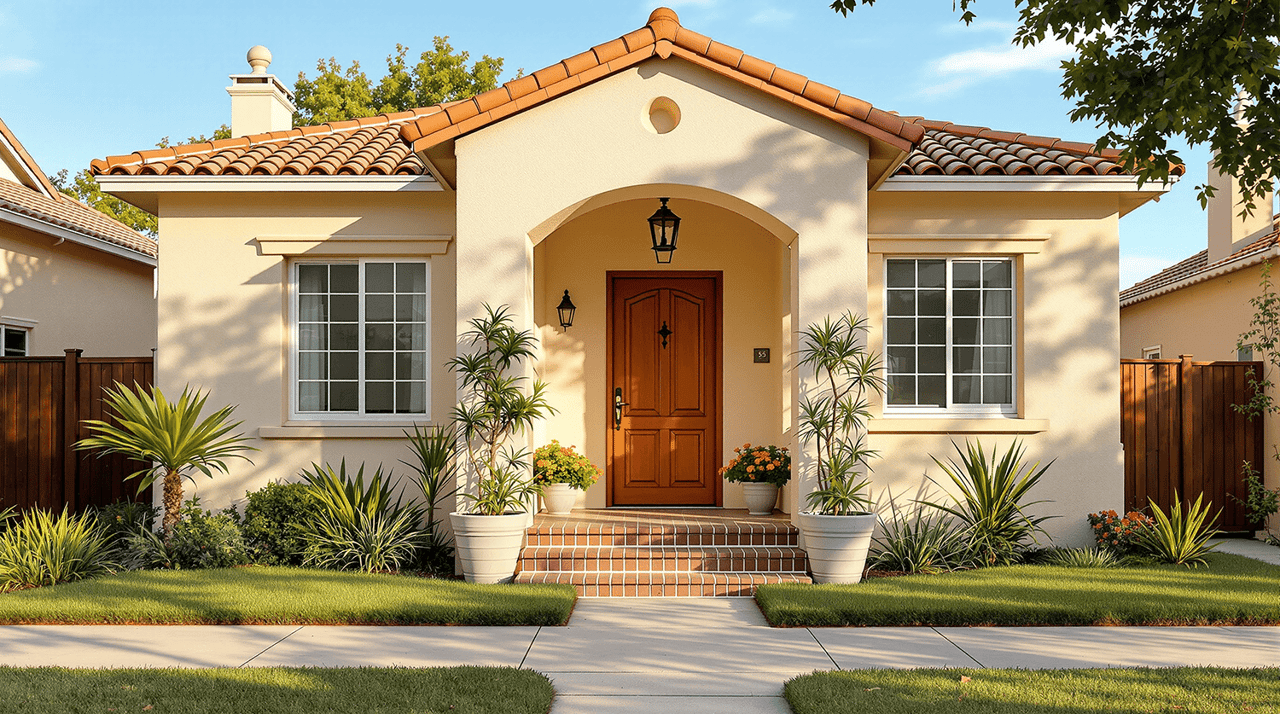
Most of the single-family housing stock dates to the 1950s and 1960s. Classic California ranch homes, typically 1,200 to 1,800 square feet, on lots that range from 5,500 to 7,500 square feet. The older ranch lots often have deeper-than-average dimensions, which is part of why the ADU math works so well.
A lot of these homes have been updated in the last ten years. You'll see kitchens and bathrooms redone, original hardwood refinished, and additions or conversions already completed. You'll also find plenty that haven't been touched since 1975. That variation is part of what makes Canoga Park work for different buyer types.
The housing stock is more varied than most west Valley neighborhoods. You have older single-family, newer infill, condos, townhomes, and a growing mixed-use presence along Sherman Way and Owensmouth. That variety gives you entry points at different price bands, which is another reason first-time buyers can actually land here.
The ADU Story Is Real
This is where Canoga Park gets genuinely interesting as an investment play.
Canoga Park's older ranch lots are some of the best ADU candidates in the Valley. Deep lots, detached garages that convert well, long driveways that support new detached construction, and zoning that supports the by-right ADU process. If you understand the ADU math, Canoga Park is where it actually pencils out.
Here's a real example of what that math looks like in 2026. You buy a 1,500-square-foot ranch on a 7,000-square-foot lot for $825K. You invest roughly $180K to $250K building a 750-square-foot detached ADU. Your all-in is around $1.05M to $1.1M. The main house rents for around $3,800 to $4,500. The ADU rents for around $2,400 to $2,800. You can live in one unit and rent the other, or rent both. The numbers actually work, which is almost unheard of in the west Valley at this price point.
I'm not saying every Canoga Park property pencils this way. Lot shape matters. Zoning varies by block. Setbacks affect what you can actually build. But the potential is real, and it's meaningfully better than what you'll find in most of the west Valley.
If you want the full ADU math on LADBS timelines, cost ranges, and rental yields, my Lake Balboa ADU guide breaks it down. The principles carry over to Canoga Park. The lot sizes, setbacks, and pocket-specific details will differ, but the core math and LADBS process are the same.
Warner Center Is Pushing Value West
This is the part most buyers miss about Canoga Park in 2026.
Warner Center has been the dominant commercial and development hub of the west Valley for years. What's changing now is the scale. New mixed-use projects continue to come online. Residential density is increasing. Class-A office space has added to the employment base even in a soft office market. The foot traffic, the restaurants, and the services are all expanding.
Canoga Park sits directly west and north of Warner Center. As Warner Center intensifies, the value pressure pushes outward. The blocks of Canoga Park closest to Warner Center are already seeing it. The rest of the neighborhood benefits from the halo effect.
This isn't speculation. You can see it in the development pipeline along Owensmouth and Sherman Way, in the mixed-use projects already approved, and in the land-value trajectory for parcels within a mile of Warner Center.
If you're buying in Canoga Park with a five-to-ten-year horizon, the Warner Center proximity story matters. You're not just buying the neighborhood as it is. You're buying in ahead of what it's becoming.
Schools: The Honest Assessment
Canoga Park is served by LAUSD, and the school situation varies widely depending on the specific attendance zone for your address.
Some Canoga Park elementary schools are solid. Others are weaker. Canoga Park High School has a mixed reputation, though it offers specific academy programs and has improved in recent years. Some Canoga Park addresses actually feed into El Camino Real Charter High School, which is a meaningful draw for buyers who know to look.
The single most important thing you can do before making an offer in Canoga Park is pull the exact school attendance zone for the specific address. Not the neighborhood average. The address. Zones vary block by block in ways that can meaningfully affect both your family's experience and your eventual resale.
For non-LAUSD options, there are charter and magnet schools in the area worth researching. Some Canoga Park families opt into charter programs that materially change the educational picture.
The Commute Reality
Canoga Park sits right off the 101 with easy access to the 118 and decent connections to the 405. For west Valley commuters, it works. For Warner Center commuters, it's almost ideal.
For Westside, downtown, or Burbank commuters, the west Valley is the west Valley. Traffic is traffic. You're looking at a meaningful drive in any scenario, and the minute difference between Canoga Park and West Hills or Woodland Hills is not going to be decisive.
Hybrid and remote work is what makes Canoga Park feasible for a lot of buyers in 2026. If your employer supports any flexibility, the west Valley math tilts heavily in favor of value plays like Canoga Park.
Public transit is limited. The Orange Line (Metro G Line) runs through the north end of the Valley, with stations accessible from Canoga Park but not embedded in it. Realistically, this is a car neighborhood.
The Honest Downsides
I'm not going to pretend Canoga Park is perfect. Let me be direct about the trade-offs.
Block-to-block variation is real. The neighborhood's residential character shifts meaningfully depending on the street. You have to do the work of finding the right pocket. A generic "I want to buy in Canoga Park" approach will put you in the wrong home.
Some areas are still working-class and in transition. The pockets near Sherman Way and the western edge of the neighborhood have more commercial bleed, more varied upkeep, and more investor activity than the polished west Valley neighbors.
Reputation lags reality. The name Canoga Park still triggers outdated assumptions in some buyer pools. That affects your eventual resale narrative. You may have to do extra work at sale time to help buyers see past the reputation.
School zones vary widely. As I mentioned above, you can't assume anything based on the neighborhood. Address-specific research is required.
Walkability is neighborhood-dependent. Some blocks have genuine walkable amenities. Others are car-dependent for everything.
These are real trade-offs. They're also why the value is still here. If the neighborhood checked every box, it wouldn't be priced like this.
Who Canoga Park Is Right For in 2026
Let me spell out exactly who benefits most from buying here right now.
- First-time buyers priced out of Woodland Hills, West Hills, or Sherman Oaks. You get into west Valley homeownership at a price that doesn't require stretching. That matters more than almost any other factor.
- Investors running ADU math. Canoga Park is one of the best places in the west Valley for ADU-driven value creation. If you know what you're doing, the numbers work.
- Move-up buyers from the central Valley. If you're coming from Van Nuys, Reseda, or Winnetka and want more house for your money without moving far, Canoga Park is a natural step.
- Long-horizon buyers who want exposure to Warner Center's growth. A five-to-ten-year hold in Canoga Park is a strong play against that development trajectory.
- Value-driven buyers who don't need the neighborhood name to impress anyone. If you care about square footage, lot size, and actual value per dollar more than the sign on the freeway exit, Canoga Park rewards you.
- Buyers willing to do the homework to find the right pocket. This is not a neighborhood where you can buy blind. It is a neighborhood where informed buyers get real upside.
Who Should Probably Look Elsewhere
- Buyers who need every block to feel the same. Canoga Park has more variation than polished west Valley neighborhoods. If that's going to stress you out, look at West Hills or Woodland Hills instead.
- Buyers who put heavy weight on the neighborhood name. If where you live needs to impress a specific social circle, Canoga Park isn't the play. That's not a knock on the neighborhood. It's honest about what matters to different buyers.
- Buyers who can't put in the due diligence on schools. If you're not going to pull actual attendance zones and research specific schools, the Canoga Park school variability will hurt you.
Is Now Actually the Time to Buy?
Straight answer. In 2026, Canoga Park is one of the better-timed buys in the San Fernando Valley for the right buyer profile.
The reasons are specific. Inventory is tight but the neighborhood hasn't been fully priced. Warner Center expansion is pushing value west. ADU math actually works here. First-time buyers have a legitimate entry point. Rates remain a drag on activity overall, which keeps competition in this price band manageable compared to the heavier competition in lower-priced pockets.
If you're a buyer who fits the profiles above, waiting doesn't help you. Canoga Park isn't going to get cheaper relative to the west Valley. The Warner Center story isn't going to slow down. The ADU window isn't going to widen.
If you don't fit the profiles above, don't force it. Neighborhoods have to match your situation. There's no prize for buying somewhere that isn't right for you.
The Bottom Line
Canoga Park in 2026 is a real value play in a west Valley market that's otherwise priced its buyers out. The right pockets offer mid-century ranch homes on deep lots at prices that still make sense. The ADU math is one of the strongest in the Valley. Warner Center development is pushing long-term value trajectory in the right direction.
You have to do the work. You have to look at specific pockets, specific blocks, specific addresses, specific school zones. You have to be comfortable with a neighborhood that's more varied than its polished neighbors. You have to see past a reputation that's outdated.
If all of that sounds like something you're willing to take on, Canoga Park deserves a real look. And if you want to talk through whether the specific pockets match your situation, the contact info is below.
Call or text (818) 697-4884 or email [email protected].
Justin Bonney is a California real estate agent (DRE #01338897) and the owner of Clear Way Real Estate in Sherman Oaks. He specializes in Lake Balboa, Van Nuys, Sherman Oaks, and the surrounding San Fernando Valley.