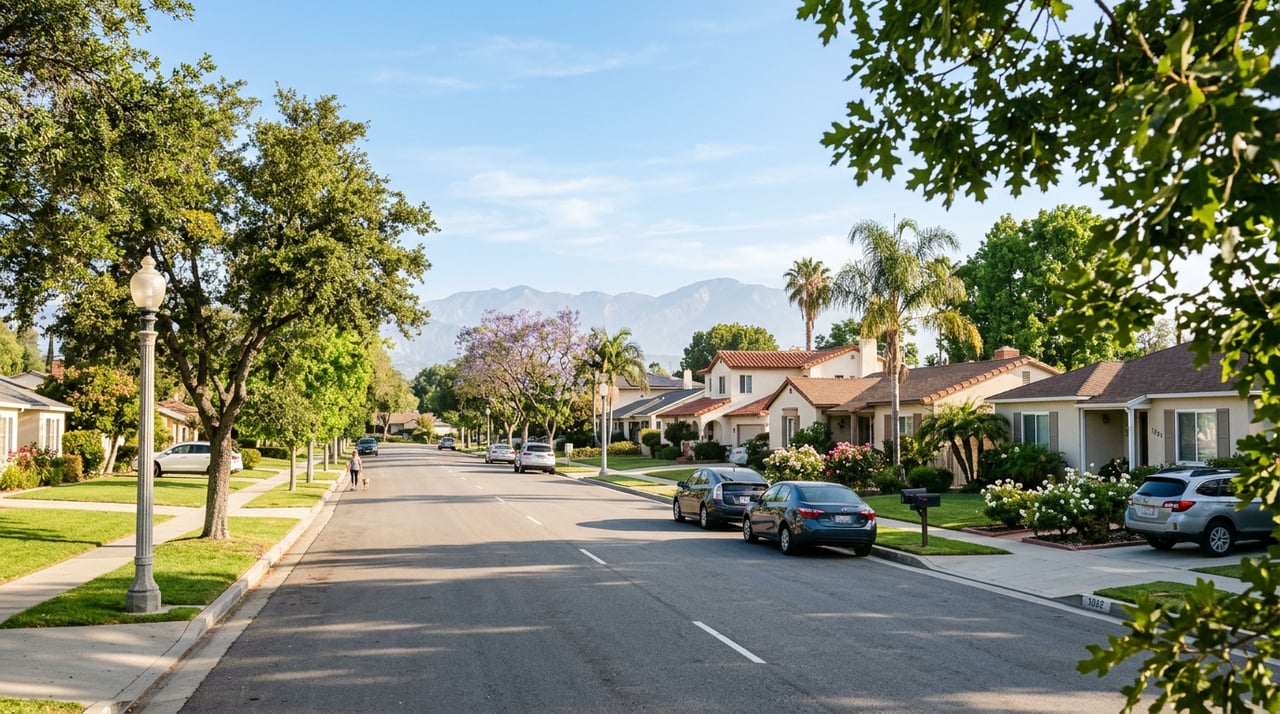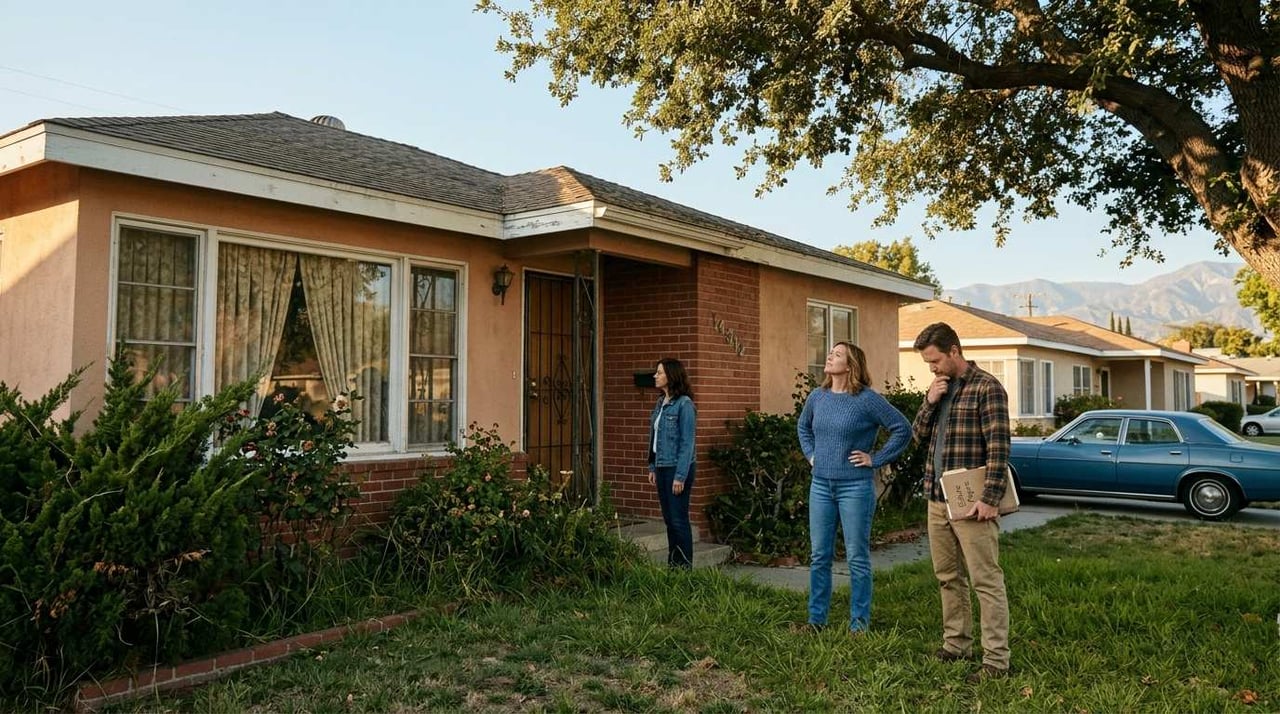
You just got the call. A parent, grandparent, or relative passed away, and somewhere in the legal paperwork and the fog of grief, there's a house. Maybe it's the place you grew up. Maybe you haven't set foot in it in five years. Either way, you're standing at the beginning of something that feels both simple and impossibly complicated at the same time.
Here's the truth: inheriting property in California, especially here in the San Fernando Valley, where inventory moves fast, and taxes can catch you off guard, is nothing like buying a house. The emotional weight is different. The legal landscape is different. The financial implications are different. And if you're inheriting with siblings or other family members, the decision tree becomes a lot more crowded.
I've worked with dozens of families through this exact situation. Some came out of it stronger. Some came out stressed, with a property they didn't want and a family dynamic that took years to repair. The difference almost always came down to one thing: understanding what you actually have to do, what you can do, and what you should do, and knowing the difference between all three.
Let's walk through this together.
The Emotional Reality Comes First
Before we talk about tax basis and probate courts and whether that 1970s kitchen is worth fixing, we need to acknowledge something: this isn't really about the house.
Inheriting property is grief with paperwork. You're processing loss while strangers in suits are asking you about title companies and probate fees. You're trying to remember how your parent took their coffee while a probate attorney is explaining the difference between a Heggstad petition and a full probate administration. That's exhausting. That's also completely normal.
I'm telling you this because I've sat across from people who felt guilty for crying in my office, or for being angry about the property, or for just wanting it to disappear so they could stop thinking about it. None of that makes you a bad person. It makes you human.
Here's my advice: give yourself permission to feel whatever you're feeling. And then, when you're ready, not on anyone else's timeline, start working through the practical steps. The grief doesn't go away when you sign the deed. But clarity helps. A plan helps. Having someone in your corner who understands both the real estate and the reality of what you're going through? That helps most of all.
Step 1: Don't Rush. The First 60 Days Matter.
This is where I see people make the biggest mistakes. The will is read, or the trust is opened, or the family meeting happens, and suddenly everyone feels like they need to decide something right now. Sell or keep? Fix it up or sell as-is? Who gets what?
Stop.
You have time. Legally, you have much more time than you think. And that's a gift you need to actually use.
Here's what the first 60 days should actually look like:
Secure the property. Change the locks if the previous owner had service providers or renters. Check that all doors and windows are secure. If the house was vacant for a while, look for signs of break-ins or squatters. In the Valley, we've seen situations where properties sit empty and invite problems.
Handle the utilities. Get the water, electric, gas, and sewage in the estate's name, or in your name if you're the executor. You don't want to discover six months later that someone's been stealing water or that the power's been off so long the system needs restoration work.
Assess the property's condition. Walk through the house with someone who knows what to look for. You don't need a $3,000 inspection at this stage. You just need to know whether you're dealing with cosmetic issues (paint, carpet, kitchen fixtures) or structural ones (roof, foundation, electrical, plumbing). That difference will shape every decision you make next.
Make sure it's properly insured. The homeowner's policy might have lapsed. Talk to an insurance agent about getting it covered while the property is in transition.
Don't make any big decisions about renovations, sales, or rentals yet. Just secure it, make sure it's safe and insured, and give yourself space to think.
Understanding California Probate: The Basics
California has a few different probate routes, and which one applies to you depends on the size of the estate and how it was set up.
Simple Probate Administration: If the estate is under a certain threshold (currently around $166,000) and there are no major complications, you might qualify for a "simple probate" or an "affidavit procedure." This is faster, usually 4-6 months, and cheaper.
Full Probate Administration: Most estates go through standard probate. A judge oversees the process. There's a probate attorney involved. There are hearings, notices to creditors, and accounting requirements. In California, this typically takes 9 to 18 months, sometimes longer if there's family conflict. Probate fees are set by statute and based on the property's value: roughly 4% of the first $100,000, 3% of the next $100,000, 2% of the next $800,000, and 1% on anything over that. For a home worth $800,000 in the Valley, you're looking at around $20,000-$25,000 in probate attorney and court costs.
Trust Administration: If your parent or relative had a living trust, the process is different. There's no court involvement. It's private. It typically moves faster (4-6 months) and costs less. The trustee manages the distribution.
Heggstad Petitions: This is a California-specific tool worth knowing about. If property wasn't formally transferred into a trust (a common mistake), you can petition the court to confirm that it should have been, without going through full probate. It's faster and cheaper than probate but still requires court involvement. If this applies to your situation, bring it up with your probate attorney immediately.
The key thing to understand: your timeline for making decisions about the property is set partly by which probate route you're on. With a trust, you might be able to move quickly. With full probate, you'll need court confirmation.
Prop 19 and Property Tax: The Rules Changed in 2021
Here's where things get real, especially in California.
Before 2021, if you inherited your parents' home, you got a huge break. Prop 13 meant your property taxes were based on the assessed value they'd established years ago, often a fraction of the current market value. So if your parents bought the house in 1985 for $150,000, and it's now worth $1.2 million, your property tax was based on a much lower number. That was the parent-to-child exclusion.
Prop 19 changed that. Starting February 16, 2021, that exclusion only applies to your primary residence, and only if you meet specific conditions.
Here's what you need to know:
- Your primary residence: If you inherit your parents' home and it becomes your primary residence, you can still claim the exclusion. Your property taxes stay based on their old assessed value. You have to move in and claim it as your primary residence. On a $1.2 million Valley home with a previous tax base of $300,000, we're talking about a difference of several thousand dollars a year.
- Investment properties and secondary residences: If you inherit a rental property or a vacation home, the property gets reassessed at current market value. That low property tax base your parents had? Gone.
- The bottom line: Your property tax basis resets at current market value unless you're occupying the home as your primary residence and meet Prop 19's requirements. On a $1.5 million home in Encino, the difference in annual property taxes can be $20,000+.
Factor this into your decision about whether to keep, rent, or sell. This single issue changes the math for most families.
The Repair Question: When to Fix It, When to Sell As-Is
I get asked about this constantly: "The kitchen's dated. The carpet's shot. Should I put $50,000 into it before I sell?"
The honest answer: sometimes yes, sometimes no.
Cosmetic repairs almost always make sense. Paint, landscaping, appliance replacement, bathroom fixtures, new carpet. These cost $10,000-$30,000, depending on the condition and neighborhood. They typically return 70-90% of their cost in the sale price, sometimes more in a strong market.
Structural repairs are a different conversation. If there's foundation work, roof replacement, electrical system updates, or plumbing issues, you're looking at $15,000 to $100,000+. These are necessary repairs, not value-adds. They don't necessarily add value commensurate with their cost. A home needs a solid foundation to sell. Fixing it gets you to market price, not above it.
My rule of thumb: Don't spend structural money on major systems unless you're planning to keep the property. If you're selling, disclose the issues, price accordingly, and let a buyer handle it. Cosmetic improvements, yes. Major systems work, only if you're renting or keeping it.
Real example: I worked with a family who inherited a 3-bed, 2-bath in Lake Balboa. The house was built in 1962 with an original roof ($25,000-$30,000 replacement) and a 1985 kitchen. I advised: fresh paint, new carpet, updated light fixtures, landscape clean-up, kitchen appliance replacements. Total spend: $18,000. We sold the house for $925,000. The buyer knew about the roof, and they were fine with that.
Sell, Rent, or Keep? A Decision Framework
This decision lives at the intersection of four things: the heirs, the finances, the condition of the property, and the emotional attachment.
When selling makes sense:
- You have multiple heirs who need to divide proceeds fairly
- The property needs significant repairs and you don't want to landlord
- You have no emotional attachment to the home
- The market is strong (and it's been strong in the Valley)
- You want to avoid the complexity of managing an inherited property
When renting makes sense:
- You have one heir, or heirs who agree on keeping it
- The property is in reasonable condition
- The rental market in that specific area supports positive cash flow
- You live locally or have a property manager you trust
- You see long-term appreciation potential
Here's the real talk on renting: the Valley market varies hugely by neighborhood. A three-bed in North Hollywood might rent for $3,500-$4,200/month. The same property in Panorama City might rent for $2,800-$3,400. After property taxes, insurance, maintenance, vacancy, and property management, your actual cash flow matters. I run Clear Way Property Management alongside the real estate business, so I've seen this math play out both ways.
If you're considering renting, make sure you understand the current rent control rules in LA for 2026. Depending on the property, you might have limitations on rent increases and eviction restrictions. That's not a reason to avoid renting, but it absolutely factors into your financial projections.
When keeping it (to live in) makes sense:
- You have an emotional connection to the home
- You're in a position to move in and use it as your primary residence
- You can qualify for the Prop 19 tax benefits
- The neighborhood and condition align with your lifestyle
Working with Multiple Heirs: When Siblings Disagree
If you're inheriting with siblings, this is where things get complicated. And I'll be direct: inherited property is where family relationships get tested.
The math is usually straightforward. An inherited property is an asset. Three heirs, three shares. But the feelings attached to that math are anything but straightforward.
Here's what works:
- Get a professional appraisal early. Everyone agrees on what the asset is worth. This removes the "I think it's worth more" argument.
- Have clear communication about each person's vision. Write it down. Acknowledge that disagreement exists.
- Bring in a neutral third party. This could be the executor, an estate attorney, or a real estate agent who specializes in inherited property.
- Be prepared for buyout arrangements. If one heir wants to keep the property, they need to buy out the others. This requires financing and legal documentation.
- Consider mediation if there's a real conflict. It's not cheap, but it's way cheaper than siblings not speaking for five years.
What a Probate-Experienced Agent Actually Does Differently
Selling inherited property is not the same as selling other property. Here's what a probate-experienced agent brings to the table:
They understand court confirmation. In formal probate, the sale requires court confirmation after a hearing. A probate agent knows the paperwork, the timeline, and what slows things down.
They know how to price inherited property. These homes often don't look like turnkey houses. A good probate agent prices them realistically and attracts buyers who understand the condition.
They understand the overbid process. In probate sales, there's a formal opening bid, then overbids, then court confirmation. This is completely different from a standard multiple offer situation.
They have relationships with probate attorneys. The sale involves legal documentation and court procedures that a regular agent might not understand.
They manage timeline expectations. A standard home sale takes 30-60 days. A probate sale takes 60-120 days, sometimes longer.
For more details on what this process looks like, our probate real estate guide for the San Fernando Valley walks through the specifics. If you're in Northridge specifically, our guide to selling inherited homes in Northridge gives you neighborhood-specific context.
Let's Talk
If you're inheriting property in the San Fernando Valley, or if you're already in the middle of this process and something feels off or unclear, reach out. We can talk through your specific situation. No obligation. No pressure. Just a conversation about what makes sense for you.
I also run Clear Way Property Management, so if you decide to rent the property, I can help with that, too. Either way, I'm here.
Justin Bonney of Clear Way Real Estate has worked with families across Lake Balboa, Van Nuys, Sherman Oaks, Northridge, and surrounding neighborhoods through exactly these situations.