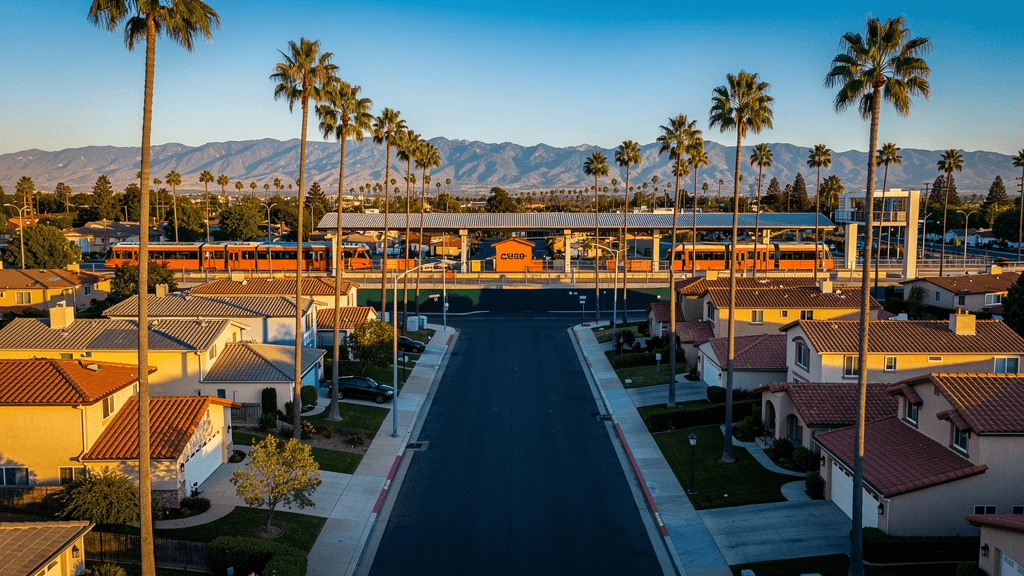
The 30-second version
Senate Bill 79, signed by Governor Newsom in October 2025, is California's most aggressive transit-oriented upzoning law in a generation. It takes effect in incorporated cities on July 1, 2026, which is less than 30 days from now.
In plain English: if your property sits within a half-mile of a qualifying transit stop, the state is now requiring your city to allow housing developments up to 95 feet tall and up to 160 dwelling units per acre on that parcel. Within a quarter-mile, the allowances go higher.
LA tried to delay implementation across most of the city by passing its own upzoning ordinance first. The state allowed that delay for most LA transit stops. It did not allow the delay for the San Fernando Valley G Line stops, including Balboa, Reseda, Sepulveda, Tampa, Woodman, Valley College, and Pierce College.
Those Valley stops go live on schedule July 1. No carveout, no buffer.
Why your neighbor is freaking out and probably should not be
The headlines are doing what headlines do. "500,000 units coming to the Valley" sounds like every block is about to grow a nine-story building. That is not how this works.
A few things SB 79 does not do:
- It does not rezone every property in the Valley. It changes the rules within a defined radius of qualifying transit stops, and the closer you are, the bigger the allowance.
- It does not require demolition of anything. Existing single-family homes stay. Owners choose whether to redevelop.
- It does not skip CEQA review for sites with environmental constraints, although it streamlines a lot of the process.
- It does not change rent control rules. Costa-Hawkins still controls what is rent-stabilized.
What it does do is take the discretionary fight out of the development application. If a project meets SB 79's objective standards, the city has to approve it. The political theater of neighborhood-by-neighborhood opposition that has defined LA housing for thirty years is largely over for transit-adjacent parcels.
Who this actually affects in the Valley
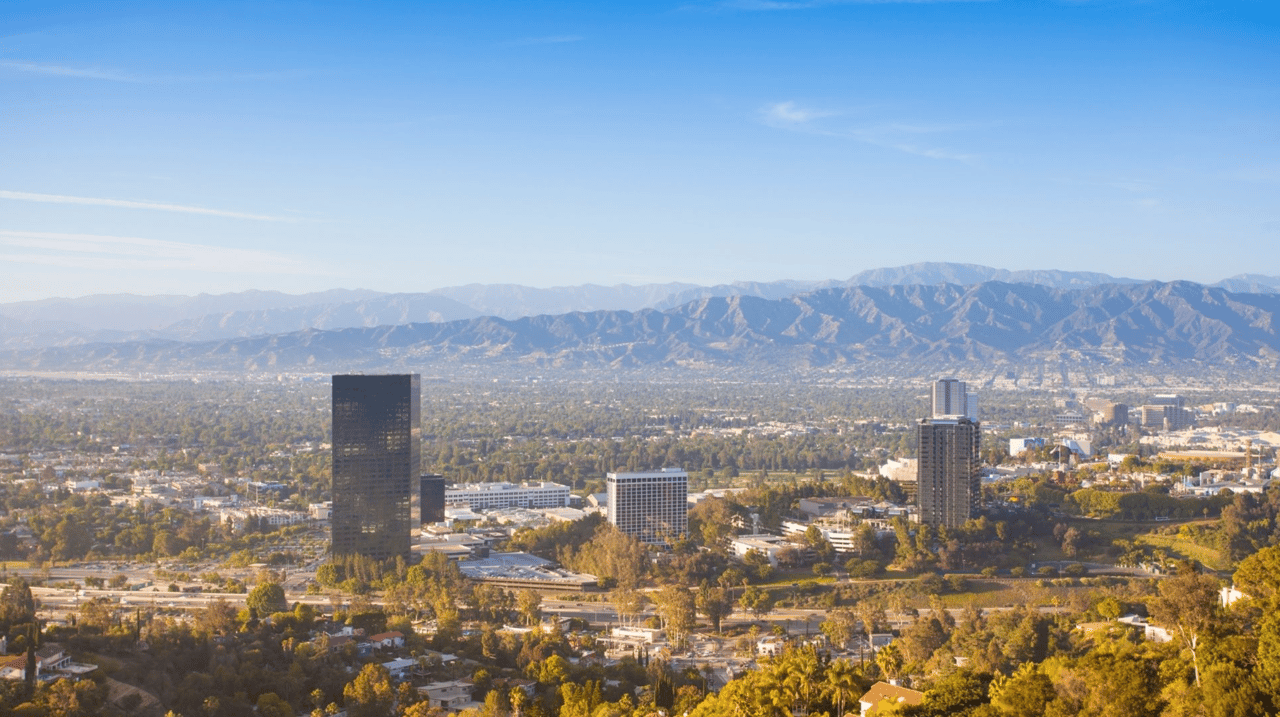
If I were drawing a heat map for SFV homeowners, here is how I would rank impact:
Highest direct impact (within a quarter-mile of a G Line stop): Properties in pockets of Reseda, Lake Balboa, Van Nuys, Sherman Oaks (Sepulveda corridor), and Woodland Hills (near Pierce College). If you own here, your underlying land value just got re-rated. Whether that is good for you depends on whether you want to hold, sell to a developer, or live next to construction.
Material impact (within a half-mile of a G Line stop): A wider ring across the same corridors. Allowances are smaller (capped at five stories), but the development math still pencils on a lot of these parcels.
Indirect impact (rest of the Valley): Lake Balboa interior streets, deep Encino south of Ventura, Studio City hillsides, Porter Ranch — these are not directly upzoned. But comp values, traffic patterns, school enrollment, and insurance underwriting will all move as the corridor densifies over the next 5 to 10 years.
What this means if you own near a G Line stop
Three honest scenarios.
Scenario 1: You want to live there forever. Do nothing. SB 79 does not force you to move. What changes is the neighborhood character over time. If you bought your block specifically because it felt low-density and quiet, the next decade will test that. Plan for it.
Scenario 2: You were thinking about selling in the next 1 to 3 years. Now is when the land-value re-rating happens, before the first round of SB 79 projects actually breaks ground. Developers and investors are running the math on parcels right now. If you are within a quarter-mile of one of those G Line stops, you should get a real opinion on what your lot is worth to a developer, not just to a retail buyer.
Scenario 3: You own a multi-parcel position or a tear-down candidate. Talk to a land-use attorney and a real estate agent who actually knows the SB 79 math. Lot assembly value just went up substantially on the right corridors. This is not retail listing work; it is project work.
What this means if you are buying right now
The quietest mistake I see buyers making this spring is ignoring SB 79 in their comp work. If you are paying retail SFR money for a parcel that a developer would pay land-value money for, that is a great thing — you are getting more land value than you needed. But if you are paying near-developer money for a parcel and you plan to live in the existing house for 15 years next to a future five-story project, that is a different conversation.
Ask your agent: is this parcel inside the SB 79 ring? If yes, what is the redevelopment math? If the answer is a shrug, get a second opinion.
What this means if you are a long-term SFV investor
This is the most material policy change for SFV land values since the 1986 single-family downzoning cycle. Two things to watch:
- Insurance overlay. As I wrote last week about the State Farm enforcement action, fire-adjacent SFV (Porter Ranch, Chatsworth, north Encino) is repricing for risk. SB 79 does not touch those neighborhoods directly because they are not transit-adjacent. So you have two different forces moving SFV simultaneously, and they affect different ZIPs.
- Rent control cliff for older SFH conversions. If you own a pre-1978 single-family home and you convert part of it into a unit under SB 79 or related ADU rules, you can pull both the main house and the new unit under rent stabilization. The carveout for fully new construction does not protect you if you remodel into a duplex. Talk to a lawyer before you do anything cute.
The bigger market read
SB 79 is the most consequential supply-side policy California has passed in a generation. Combine it with the 2026 ADU updates (permanent removal of owner-occupancy requirements for ADUs permitted after Jan 1, 2026, pre-approved plans required statewide by January 2026, 15-business-day completeness deadlines), and you have a state that is actively trying to force more housing onto land that already has access to transit.
Whether that is good or bad for your specific situation depends entirely on where your parcel sits and what you want to do with it. The single thing I will not do is pretend this is either an apocalypse or a windfall in the abstract. It is a specific change with specific consequences for specific addresses.
How to use me on this
If you own in the Valley and you want a free 20-minute call to walk through where your specific parcel sits relative to the SB 79 rings, what your lot is realistically worth in both a retail and a developer scenario, and what the timing looks like for a sell-or-hold decision, that is exactly the kind of conversation I am set up for.
Justin Bonney, DRE #01338897
Clear Way Real Estate
15233 Ventura Blvd, Suite 500, Sherman Oaks
(818) 697-4884
Not legal advice. SB 79 implementation will vary by parcel. For specific land-use questions, talk to a licensed California land-use attorney.
Sources
- SB 79 official bill text and legislative history (California Legislature)
- Governor Newsom signs SB 79 — Senator Wiener's announcement
- LA Metro G Line stations and route (Wikipedia)
- LA Metro G Line improvements project (metro.net)