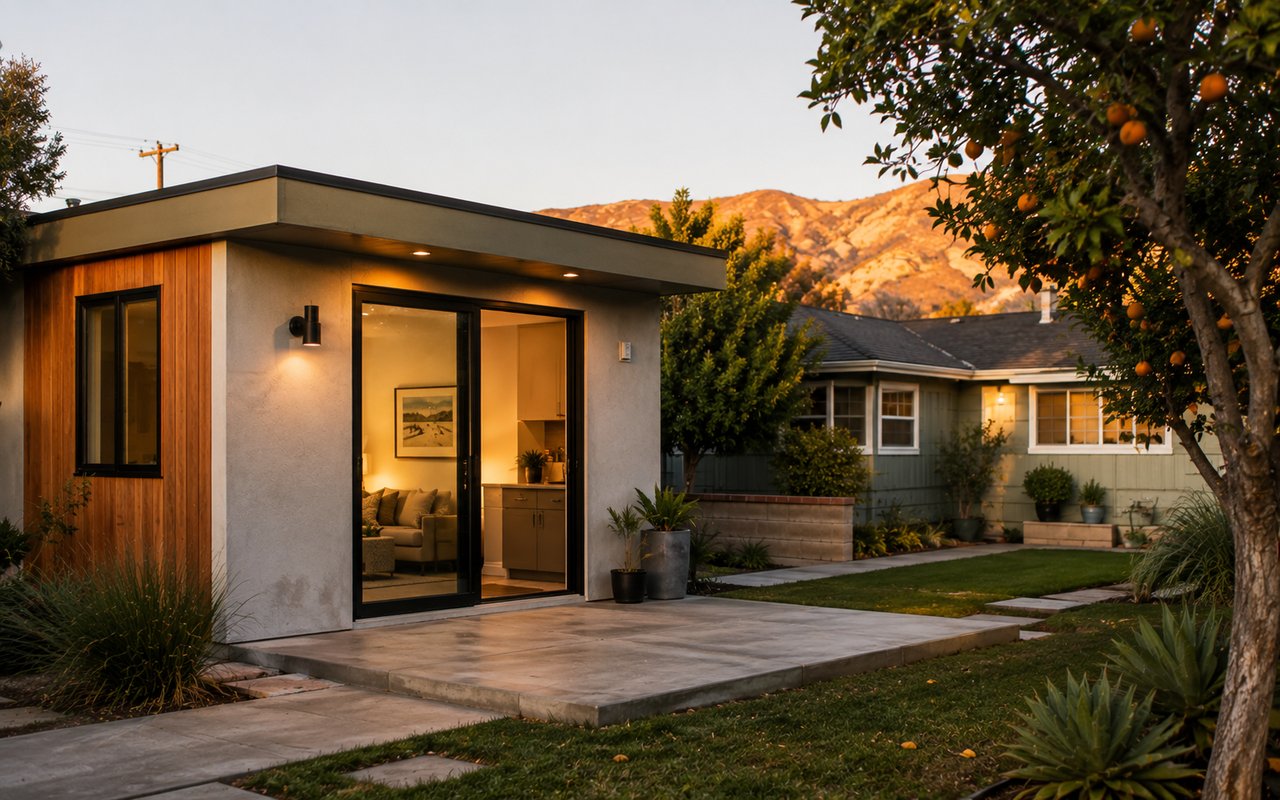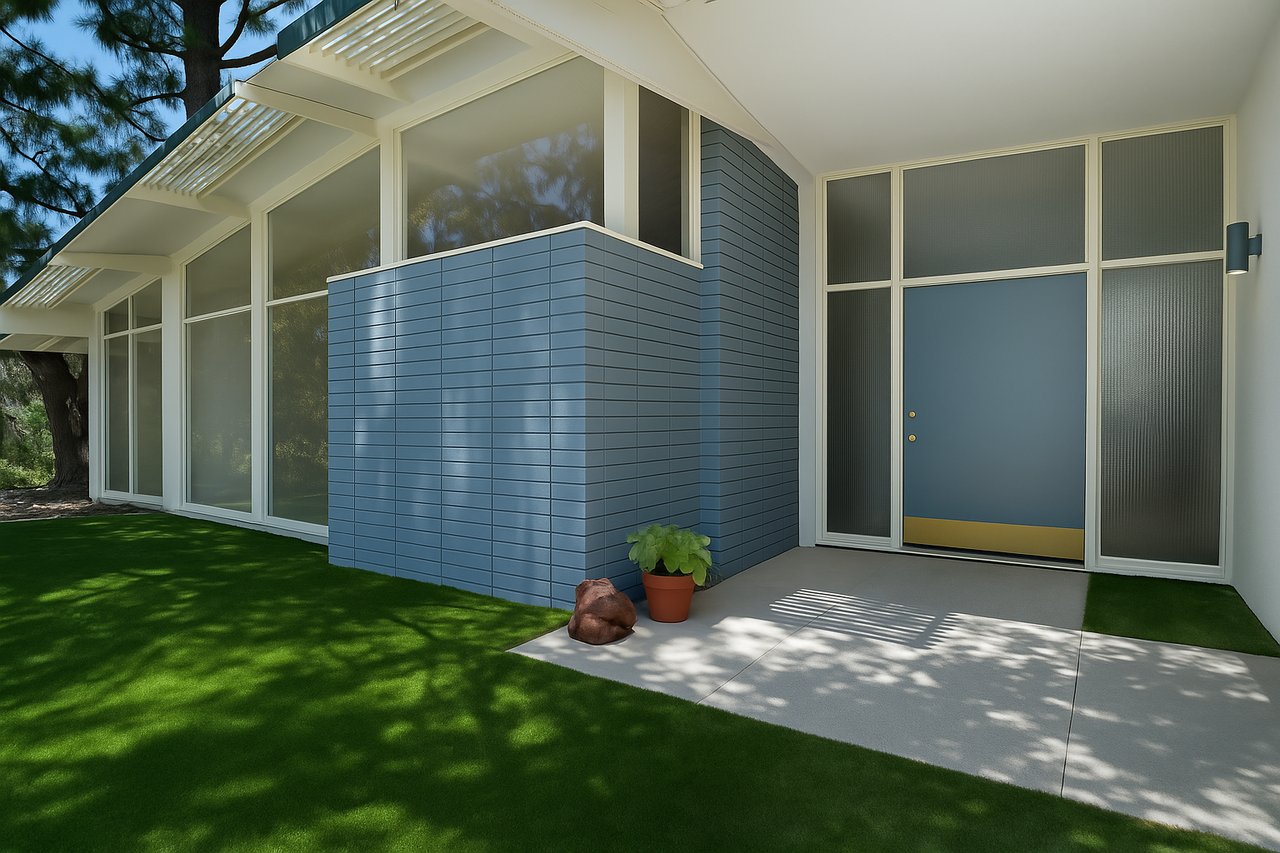
While names like Frank Lloyd Wright and Richard Neutra may dominate architectural history, few have had a more practical and lasting impact on everyday California homes than Edward Fickett, FAIA.
Over a 50-year career, Fickett is credited with designing between 40,000 and 60,000 structures, depending on the source. The Los Angeles Conservancy attributes 50,000 or more homes to him, while his widow, Joyce, told the Larchmont Chronicle that the actual number is closer to 60,000. Whatever the exact count, the scope is staggering: tract homes, custom residences, resorts, military bases, restaurants, and government buildings across Southern California and beyond.
His legacy is particularly felt across the San Fernando Valley, where 10,000 Fickett homes were built in the 1950s alone, creating stylish, functional homes for working and middle-class families. From Encino and Granada Hills to Reseda, Van Nuys, and Woodland Hills, his designs helped define the postwar California lifestyle, and their appeal is stronger than ever.
The Architect Behind the Homes
Edward Hale Fickett was a fourth-generation Angeleno, born in 1916 and the son of a building contractor. He attended the architecture school at USC, but hard times forced him to leave after his first year to work for his father. The story of how he got back to school is one of the great anecdotes of mid-century LA architecture.
On a contracting job at the home of actress Irene Dunne, Fickett walked into the kitchen for a glass of water and found her crying at the table. The renowned architects she had hired from New York and Italy could not translate her vision. Fickett asked what she wanted and began drawing plans on the back of her blueprints as she spoke. "Yes, my son! Keep going! This is what I want," Dunne reportedly told him. Three days later, an anonymous donor paid Fickett's full way back to USC. Years later, Dunne confirmed it had been her.
Fickett went on to earn a master's degree from MIT, served as a Lieutenant Commander in the U.S. Navy in charge of the Pacific Arena during World War II, and trained under the legendary Paul R. Williams before launching his own firm.
His credentials extended far beyond residential design. Fickett served as architectural adviser to President Eisenhower and consulted to the federal government on housing. He lectured across the country on Modernism alongside Richard Neutra, R.M. Schindler, Buckminster Fuller, and A. Quincy Jones, traveling to Stanford, Berkeley, MIT, and the University of Florida to recruit the next generation of architects to his vision.
There is a great story about that group too. When Fickett wanted to add Frank Lloyd Wright to his lecture team, the rest of the architects bet him $10 that the cantankerous Wright would never agree. As Joyce Fickett recounted, "He got Frank Lloyd Wright and he got $10."
Fickett designed homes for celebrity clients including Joan Crawford, Ava Gardner, and Dick Clark, plus a residence for Charlie Chaplin on Switzerland's Lake Geneva. He also designed the original Sands Hotel in Las Vegas (1952), passenger and cargo terminals at the Port of Los Angeles, and the master plans for Edwards and Norton Air Force Bases. He was so prolific the AIA nicknamed him "King of the Tennis Courts" for being the first architect to design cantilever tennis courts.
What Makes a Fickett Mid-Century Modern Home?
Fickett brought modernist design to the masses, creating homes that were as beautiful as they were functional. His genius was making affordable housing feel "palatial," as he put it, for returning servicemen and average American families.
Signature features include:
- Floor-to-ceiling glass walls
- Open, L-shaped floor plans
- Seamless indoor-outdoor living
- Clerestory windows and 14-foot ceilings in some models
- Use of concrete slabs, metal-framed windows, and colored plaster for cost-effective durability
- A blend of wood, glass, and brick for warmth and visual balance
- Playful rooflines that distinguished his work from generic tract development
Fickett was a forerunner in raising ceiling heights and bringing floor-to-wall windows into mainstream homes. His personal philosophy traced back to childhood memories of being separated from his mother as she prepared meals in a closed kitchen. As the AIA put it, he sought to "rethink radically how space in the home could be rearranged to bring the family together."
Part of Fickett's acumen was his ability to design for land that other architects considered unbuildable. He was so prolific that today, many homeowners do not even know they live in a Fickett house.
Where to Find Fickett Homes in the San Fernando Valley
Fickett left his mark on multiple neighborhoods throughout the Valley. Here is a breakdown of the most notable tracts, many of which are still intact and celebrated today.
Encino – Martson Tract
In the hills of Encino, the Martson Tract features post-and-beam homes designed in partnership with developer Stanley Martson. These homes offer clean lines, privacy, and natural light, ideal for indoor-outdoor living.
Granada Hills – Granada Estates
Granada Estates showcases Fickett's ability to combine suburban family living with mid-century aesthetics. Large glass windows, carports, and open flow made these homes ideal for the postwar boom.
Reseda (Northridge Adjacent) – Sherman Park
According to the Eichler Network, Sherman Park in northern Reseda, near Northridge, was one of L.A.'s earliest modernist tracts. Built in the early 1950s, these homes featured soaring ceilings and walls of glass in a modest footprint.
Reseda – Meadowlark Park
As documented by US Modernist, Meadowlark Park (built in 1953) emphasized affordable design with wide-open layouts, carports instead of garages, and large outdoor living areas. It remains one of Fickett's most concentrated and recognizable Valley tracts.
Woodland Hills – Country Estates
A well-known enclave of Fickett homes featuring long horizontal lines, clerestory windows, and generous indoor-outdoor relationships on larger lots.
Van Nuys – Coronet Tract
Though lesser known, homes near Coronet Street in Van Nuys are considered by enthusiasts to be part of Fickett's quiet residential contributions. These homes are compact, well-constructed, and full of mid-century charm.
Van Nuys – Sherman Way Homes
A small enclave of mid-century homes off Sherman Way features many of Fickett's key elements: glass-forward design, modest luxury, and enduring livability.
Beyond the Valley: Fickett's Wider Footprint
Fickett's work spans Los Angeles and beyond in pockets that serious mid-century buyers should know about.
Hollywood Hills — custom Fickett homes are concentrated in upper Nichols Canyon, including the area sometimes called The Colony. He also designed Sherwood Park (c. 1956) in the Hollywood Hills and a memorable 1953 weekend retreat in Hollywoodland that Atomic Ranch documented as part of their fixer-upper series.
Sherman Oaks — private, often elevated post-and-beam custom homes south of Ventura Boulevard represent some of Fickett's most architecturally ambitious Valley work.
Beverly Hills — Fickett designed homes within Trousdale Estates, including the residence where he and his wife Joyce lived part-time.
Los Feliz — home to the Jacobson House, a Historic-Cultural Monument designed by Fickett.
Pacific Palisades — a small but notable collection of Fickett-designed custom homes.
Palos Verdes — Rollingwood Estates (1955) showcases Fickett's reach beyond the Valley.
West Hollywood — Fickett also designed multifamily housing now recognized as significant, including the Sunset Lanai Apartments (1952) and Hollywood Riviera (1954).
Hancock Park / Fremont Place — Fickett renovated a 1920s Tudor at 131 Fremont Place, kept its architectural integrity, and added an open kitchen and large windows for natural light.
San Pedro — a small, often-overlooked group of Fickett homes that mid-century enthusiasts know to look for.
Why Fickett's Legacy Still Matters
Edward Fickett was not chasing celebrity. He preferred drawing boards to interviews. But his influence did not go unnoticed. He was featured in Sunset, Better Homes & Gardens, and Architectural Digest, earned the highest honors from the American Institute of Architects as a Fellow (FAIA), and upon his death the AIA named him "An American Hero." Then-Governor Gray Davis praised him as "an exceptional architect who made many beautiful contributions to his community and to the people of this great state."
When Fickett died in 1999 at age 83, he was working on the restoration of LA's historic City Hall. President Bill Clinton sent his widow Joyce a letter of condolence and an American flag.
His legacy was further cemented in 2014 when Rizzoli published California Moderne and the Mid-Century Dream: The Architecture of Edward H. Fickett by Richard Rapaport, a definitive monograph of his work.
His homes stood for something revolutionary at the time: architecture for the people. Today, Fickett homes are treasured for their:
- Authentic mid-century modern design
- Proven durability and smart layouts
- Adaptability for restoration or modern upgrades
- Architectural significance in the context of L.A. housing history
Further Reading
For more on Fickett's life and work:
- LA Conservancy's Edward Fickett biography — the definitive overview of his career and impact
- Larchmont Chronicle: "Fickett built 'palatial' homes for everyone" — features Joyce Fickett's firsthand recollections and personal anecdotes
- LA Times archive: Fickett feature (June 2006) — historical newspaper coverage of his work
- Architect Magazine: "When Modernism Was Zippy" — design publication coverage of Fickett's mid-century legacy
- Atomic Ranch: Fickett Fixer-Upper in Hollywoodland — a real-world look at restoring an original Fickett home
- Eichler Network's "Forgotten Giant" article — a deep dive into Fickett's role in Southern California Modernism
- USModernist's Fickett archive — tract-specific documentation including Meadowlark Park and Granada Hills
For broader context on Valley mid-century modern architecture, see my full guide: Mid-Century Modern Homes in the San Fernando Valley: Where to Find Them.
Thinking About Buying or Selling a Fickett Home?
As a San Fernando Valley real estate broker with a deep appreciation for architectural homes, I can help you:
- Identify whether your property is a Fickett
- Find and purchase a Fickett home in your ideal neighborhood
- List your home with storytelling and strategy to maximize its architectural value
These homes are not just structures. They are pieces of California history.
Justin Bonney | Clear Way Real Estate DRE #01338897
Let's preserve and build upon the legacy of Edward Fickett, one home at a time.
Photo Courtesy of Barry Dantagnan, Coldwell Banker Realty