Quick Answer
Lake Balboa is a small residential neighborhood in the central San Fernando Valley, built around the park and lake of the same name inside the Sepulveda Basin. It was officially carved out of Van Nuys in the early 2000s, and that separation is the single most important fact about the local market: the same house carries a different perceived value depending on whether it is described as Lake Balboa or Van Nuys, even when it sits on the same street. It is quiet, flat, mostly single-family, and it sits under a flight path. All of that is true at once.
Where Lake Balboa Is
Lake Balboa occupies the 91406 ZIP code, west of the 405 and north of Victory Boulevard, wrapped around the western and northern edges of the Sepulveda Basin Recreation Area. Van Nuys is to the east, Encino to the south across the basin, Reseda to the west, and Northridge to the northwest.
The boundaries are commonly given as roughly Victory Boulevard to the south, Roscoe Boulevard to the north, Woodley or Balboa on the east depending on who is drawing the line, and Lindley or Reseda on the west. The eastern edge is the contested one, and it is contested for a financial reason covered below.
Why the Van Nuys Split Still Matters
Residents petitioned to separate from Van Nuys, and the neighborhood was formally recognized in the early 2000s. The stated motivation was identity. The practical effect was on property values and perception.
This creates a specific and ongoing situation. Homes near the eastern boundary can legitimately be marketed either way. Sellers use Lake Balboa. Automated valuation tools, which key off ZIP and county records rather than neighborhood marketing, often do not distinguish cleanly. The result is that online estimates in this pocket are frequently unreliable in both directions.
If you are selling here, that gap is your opportunity and your risk. Priced off a Van Nuys comp set, you leave money behind. Priced off the most aspirational Lake Balboa comp, you sit on the market and then cut, which costs more than the overreach gained. The answer is street-level comps.
What the Housing Looks Like
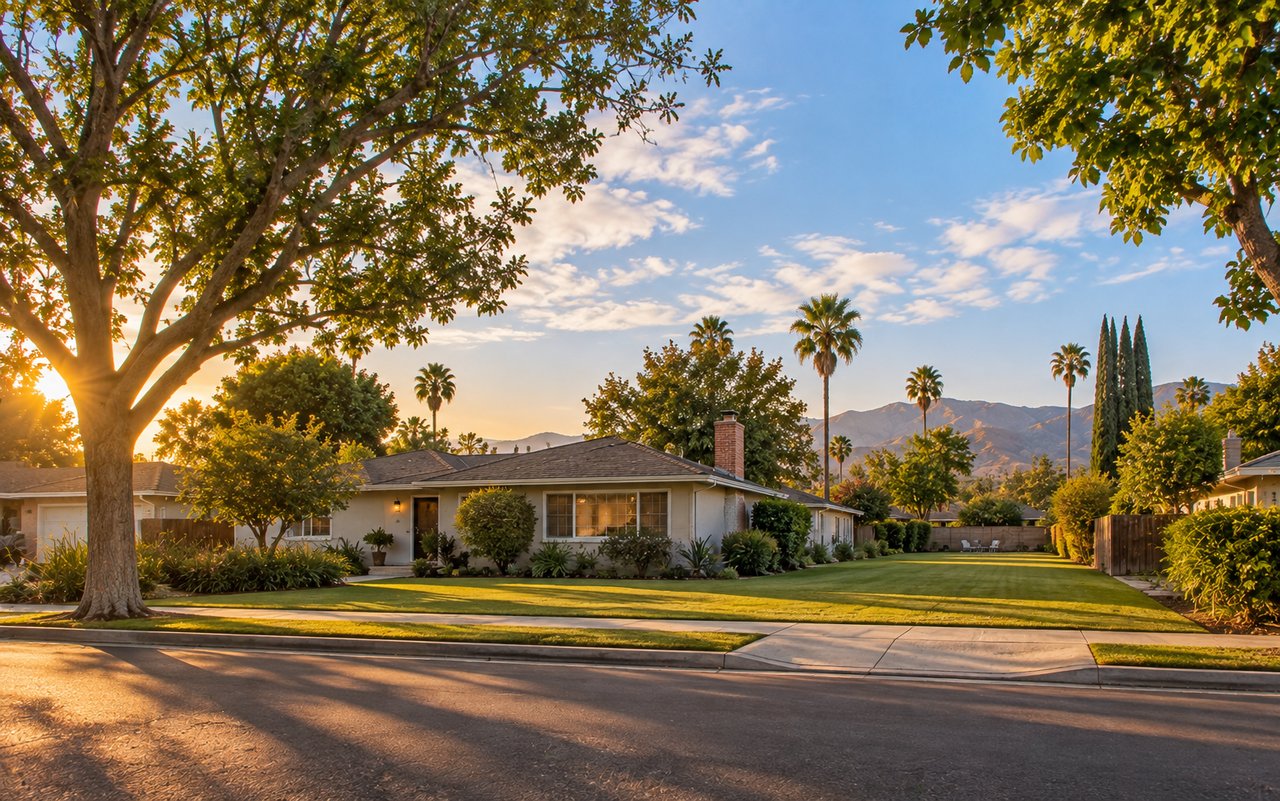
Lake Balboa is overwhelmingly post-war single-family tract housing, mostly built in the 1950s, on flat standard lots. Think three-bedroom ranch homes, detached garages, and generous backyards by Los Angeles standards. There is very little hillside, very little historic character housing, and a modest amount of condo and apartment product along the larger corridors.
The upside of that uniformity is that comps are unusually clean here. Houses on the same block are genuinely comparable in a way they are not in, say, Valley Village. The downside is that differentiation comes almost entirely from what an owner has done to the property, so condition drives price more than location does within the neighborhood.
Those flat, standard lots are also why Lake Balboa has become an active ADU neighborhood. The backyards support it, and the lot geometry is straightforward. If you are evaluating a property here, the ADU question is worth running before you buy, not after.
The Park Is the Real Amenity
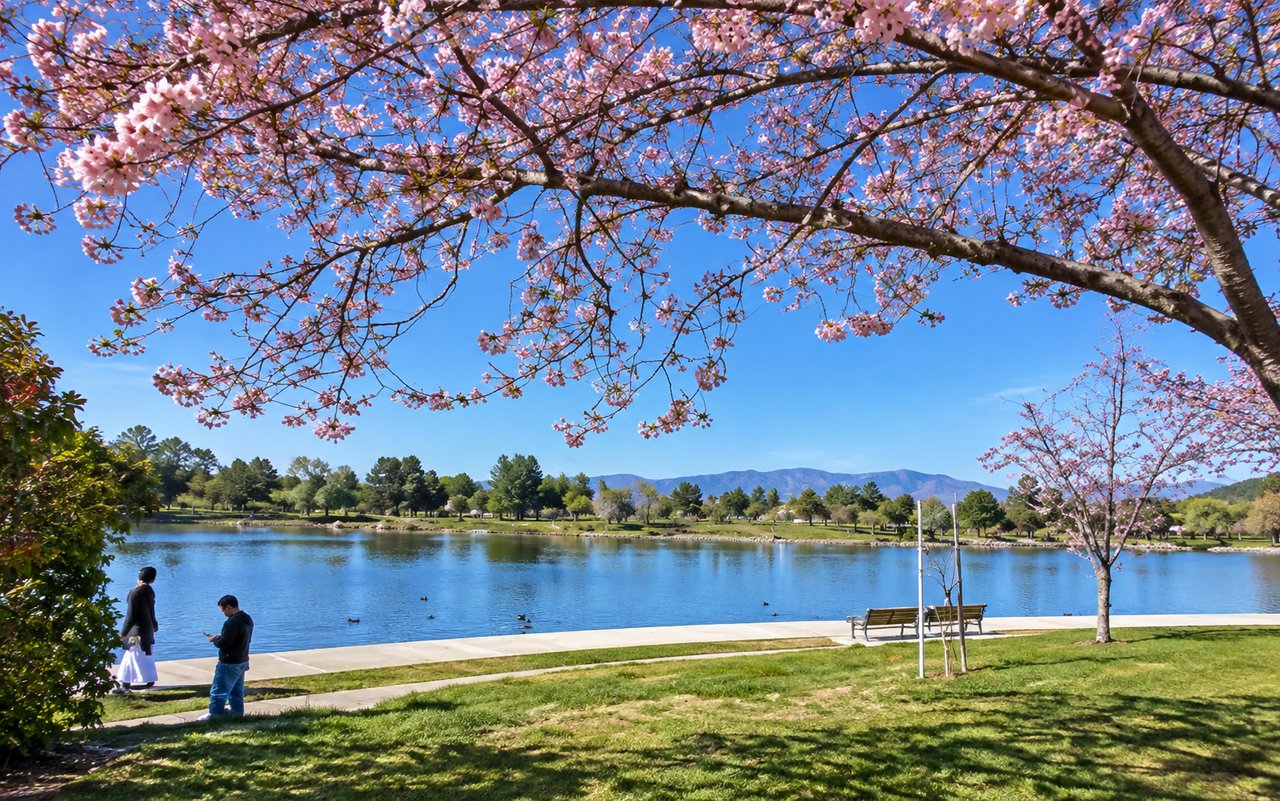
Lake Balboa Park is the neighborhood's defining feature, and it is genuinely good. There is a walkable loop around the lake, a large stand of cherry trees that draws crowds when they bloom in spring, fishing, paddle boats, and direct access to the broader Sepulveda Basin with its bike paths, sports fields, and the Japanese Garden nearby.
For buyers with kids or dogs, this is the thing that closes the deal. Having a real park you can walk to is rare in the Central Valley, and it holds value.
The Honest Downsides
Aircraft noise is the big one. Van Nuys Airport is immediately north, and it is one of the busiest general aviation airports in the country. Parts of Lake Balboa sit under active approach and departure paths. This is not a minor quibble, and it is the most common reason buyers back out here.
Do this before you write an offer: visit the property on a weekday morning and again on a weekend afternoon, and stand outside for fifteen minutes. Noise varies substantially block to block depending on flight path. Some streets are unaffected. Others are not, and no amount of window upgrading fully solves it. Disclosure requirements exist, but your own ears are the better test.
Summer heat is the second. The Central Valley runs hot, and 1950s tract housing often has aging HVAC. Budget for it.
Third, the retail is ordinary. Lake Balboa is a residential neighborhood with functional strip-center shopping. Dining and nightlife mean driving to Encino, Sherman Oaks, or Woodland Hills.
Fourth, inventory is thin because the neighborhood is small. Buyers should expect to wait for the right house rather than choose among several.
Who Lake Balboa Suits
It suits buyers who want a flat lot, a real backyard, and a walkable park, at a price below Encino or Sherman Oaks. It suits people planning an ADU, because the lots cooperate. It suits families who value quiet residential streets over walkable amenities.
It suits you less if you are noise-sensitive, if you want character housing, or if you need a walkable dining scene. And if you are noise-sensitive, take that seriously rather than assuming you will adjust.
What Sellers Should Do Differently Here
Two things. First, get the neighborhood designation right in the listing and make sure the comps you price against are actually Lake Balboa comps, not a ZIP-wide blend that pulls in Van Nuys. Second, address the airport question proactively rather than hoping buyers do not notice. Buyers who discover flight noise on their own walk. Buyers who are told upfront, and who then visit and decide it is fine, close.
Condition matters more here than in most Valley neighborhoods, because the housing stock is so uniform. A clean, updated, well-maintained house stands out in a way it would not on a block with more architectural variety.
Frequently Asked Questions
Is Lake Balboa a good place to live?
For buyers who want a flat lot, a genuine walkable park, and quiet residential streets at a mid-Valley price, yes. The main trade-offs are aircraft noise from Van Nuys Airport in parts of the neighborhood, summer heat, and unremarkable local retail.
Is Lake Balboa part of Van Nuys?
It was until the early 2000s, when residents successfully petitioned to establish Lake Balboa as a separate neighborhood. The two still share territory at the boundary, and homes near the eastern edge are sometimes marketed either way.
What ZIP code is Lake Balboa?
- That ZIP also covers part of Van Nuys, which is a common source of confusion in online price estimates.
Is Lake Balboa loud because of Van Nuys Airport?
Parts of it are. Van Nuys Airport is directly north and is a very busy general aviation field. Noise varies significantly street to street depending on the flight path. Visit the specific address at different times of day before committing.
Can you build an ADU in Lake Balboa?
The flat, regular lots common in Lake Balboa are well suited to ADUs, and many owners have built them. Feasibility is still parcel-specific, depending on setbacks, utilities, and lot dimensions, so verify with the City before you assume.
Is Lake Balboa safe?
It generally reads as a quiet residential neighborhood where property crime is the more common concern than violent crime. Conditions vary by block, particularly closer to the major corridors, so check current LAPD West Valley Division data for the specific area.
Buying or Selling in Lake Balboa?
Lake Balboa is my home turf, and it is a neighborhood where the block matters more than the listing photos and where the Van Nuys boundary question can move a price meaningfully in either direction.